

If you know what a shell hole is, you’ll know they sometimes come in handy. Readers who remember the Blitz may be fewer in number these days, but those who have seen war are likely familiar with these large craters left after bomb blasts.
In open battle, soldiers dive into them to take cover to gain fleeting respite from enemy fire, bandage the wounded, regroup and go again. After fighting stops, they might fill with rainwater, a makeshift bathing spot for filthy feet.
So it’s fitting that ‘shell hole’ is also the name given to social spaces providing safety and support to ex-servicemen. The Memorable Order of Tin Hats (M.O.T.H.) is the ex-servicemen’s charity which established Hackney’s ‘shell hole’, the General Browning MOTH Club.
While the organisation itself started in South Africa in 1927, its founder — Charles Evenden — was from Hackney. He attended Haggerston Road School (which was later destroyed in the Second World War) before becoming a cartoonist and newspaper man.
He went on to witness life in the trenches as a soldier in the First World War in Egypt and Gallipoli, before settling in Durban, South Africa. He established the MOTH movement, a members-based support network of social spaces centred around three concepts: true comradeship, mutual help, and sound memory.
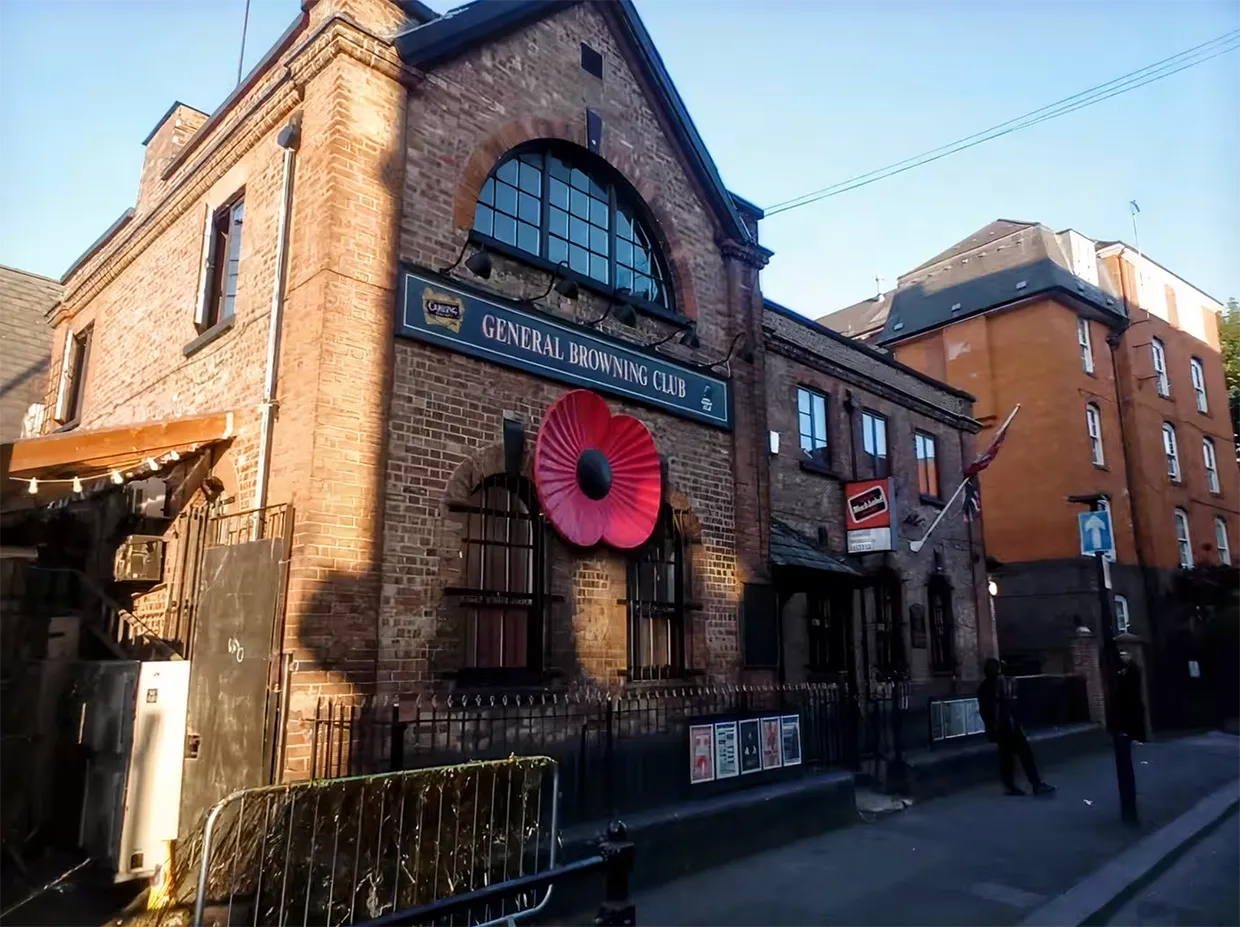
Shell holes opened all over South Africa, Zambia, and Malawi, extending as far as Australia and New Zealand. The Hackney branch is one of a handful in the UK and opened in 1972. At its peak, the MOTH counted more than 14,000 members and 3,500 remain.
The venues were a cornerstone of the expat scenes in these countries; ready-made social clubs catering for anyone who had been in the military in any capacity.
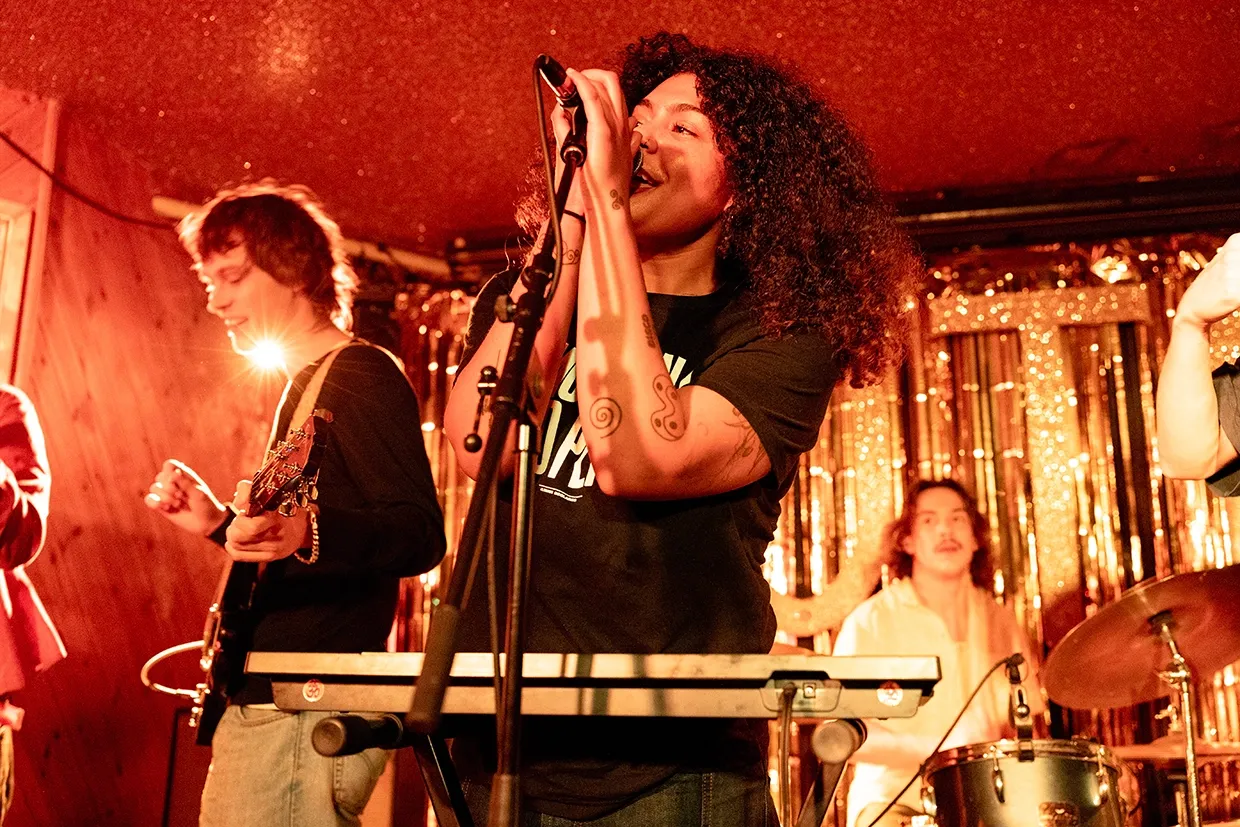
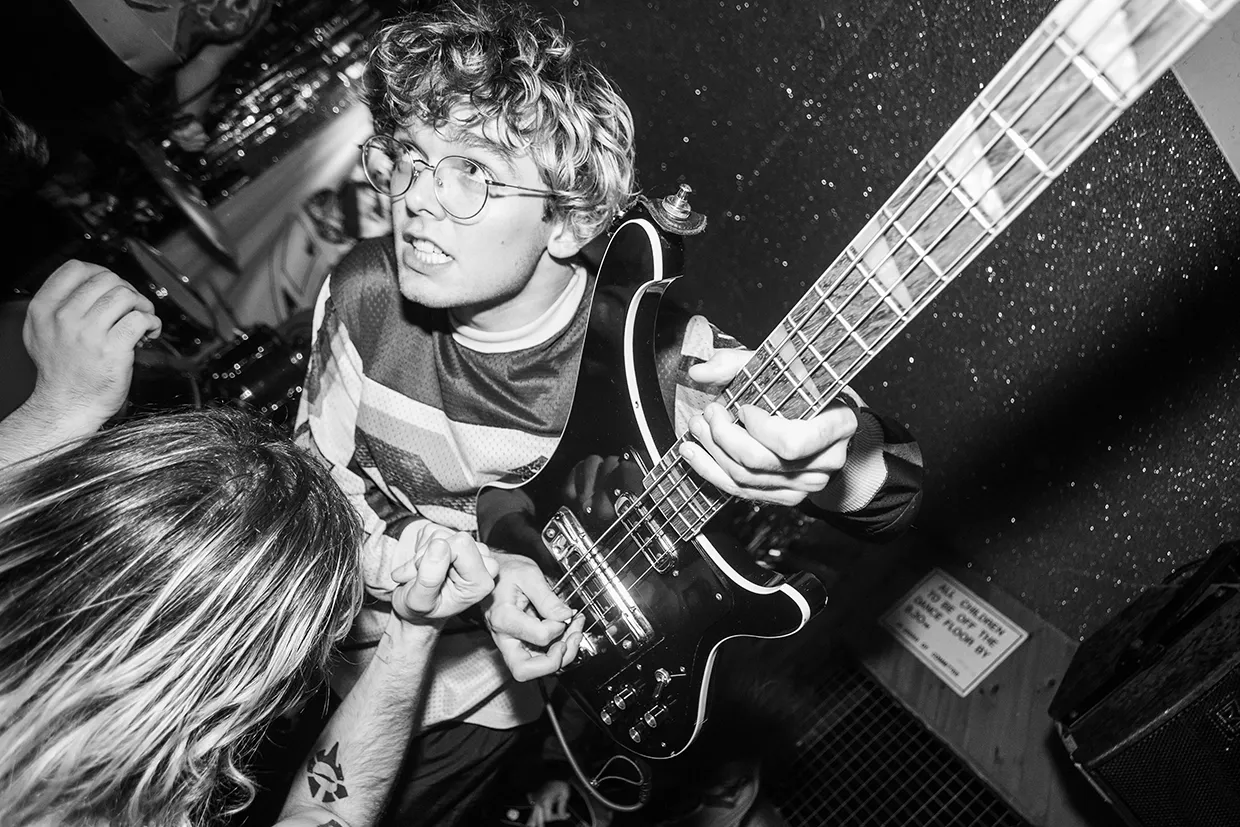
Today, the ex-servicemen’s club serves as a different kind of refuge — it is now a much-loved independent venue, combining its 70s veterans club feel with an intimate stage for live music, comedy, and DJ sets.
After the original MOTH encountered financial struggles between 2012-2015, the venue partnered with promoters LNZRT and was thoughtfully refurbished to become part music venue, part servicemen’s club. Nowadays, artists use the club’s meeting rooms as green rooms before performances.
“It’s been a space for service people in Hackney — men and women who are often pensioners — to come together and feel supported by each other, to not be isolated in their homes,” said general manager Edie Kench-Andrews, who has been working there since February 2024.
MOTH’s social history seeps out of every corner. “We have plaques and commemorations from every service you could possibly imagine,” said Kench-Andrews. “The MOTH is named after General Browning who was an important lieutenant general in the First World War.
"They have his original uniform upstairs in a case given to the Moth Club by his family.” General Frederick Browning was a decorated officer of the British Army who was married to Daphne Du Maurier and competed in the Olympics in the bobsleigh event.
“In the meeting room they have everything from medals to plaques, paintings, bits of weaponry, decommissioned shells, gas masks, and of course helmets,” she said.
“For me one thing I really respect about that room as a space is that when you walk in, on the right hand side you have a pair of boots, a uniform and the commemorative plaque for soldiers who have fallen.
“When the members come and do their official meetings, they have to pay respects to that chair. It’s called the Empty Chair.”
The women’s branch of MOTH is known as MOTHWA, women’s auxiliary. “They used to have the gentleman’s group and the women’s auxiliary for wives and women who had served. They had their own room in the club and their own meeting days,” explained Kench-Andrews.
MOTH Club’s building – with its giant poppy motif on the exterior – was built in 1912 and is known as the Old Trades Hall. Originally it provided a venue for trade unions in the early 20th century. It’s referred to in Hackney Archives as an important venue for the Hackney Trades Council through most of the century.
For Kench-Andrews, it’s astonishing more is not made of the venue’s historical importance in Hackney. “It’s a historical area, and we fall a matter of metres outside of the Mare Street Conservation Area and yet the MOTH Club is teeming with history, even before it opened as the Moth Club.”
The conservation area stretches from just south of the Mare Street Market up to the library opposite the Picturehouse and Paragon Road.
Kench-Andrews said the camaraderie and club spirit has been a driving force behind her work there so far, not to mention the rich musical history the venue is now building up.
“We recently hosted the Vaselines. Honestly they were some of the kindest people I’ve ever met. When I think about really memorable bands and memorable nights, they’re definitely up there.
“We’ve had Idles play as well as the Lambrini Girls. Loads and loads of bands that are really erupting at the moment. They had their night in the MOTH Club.”
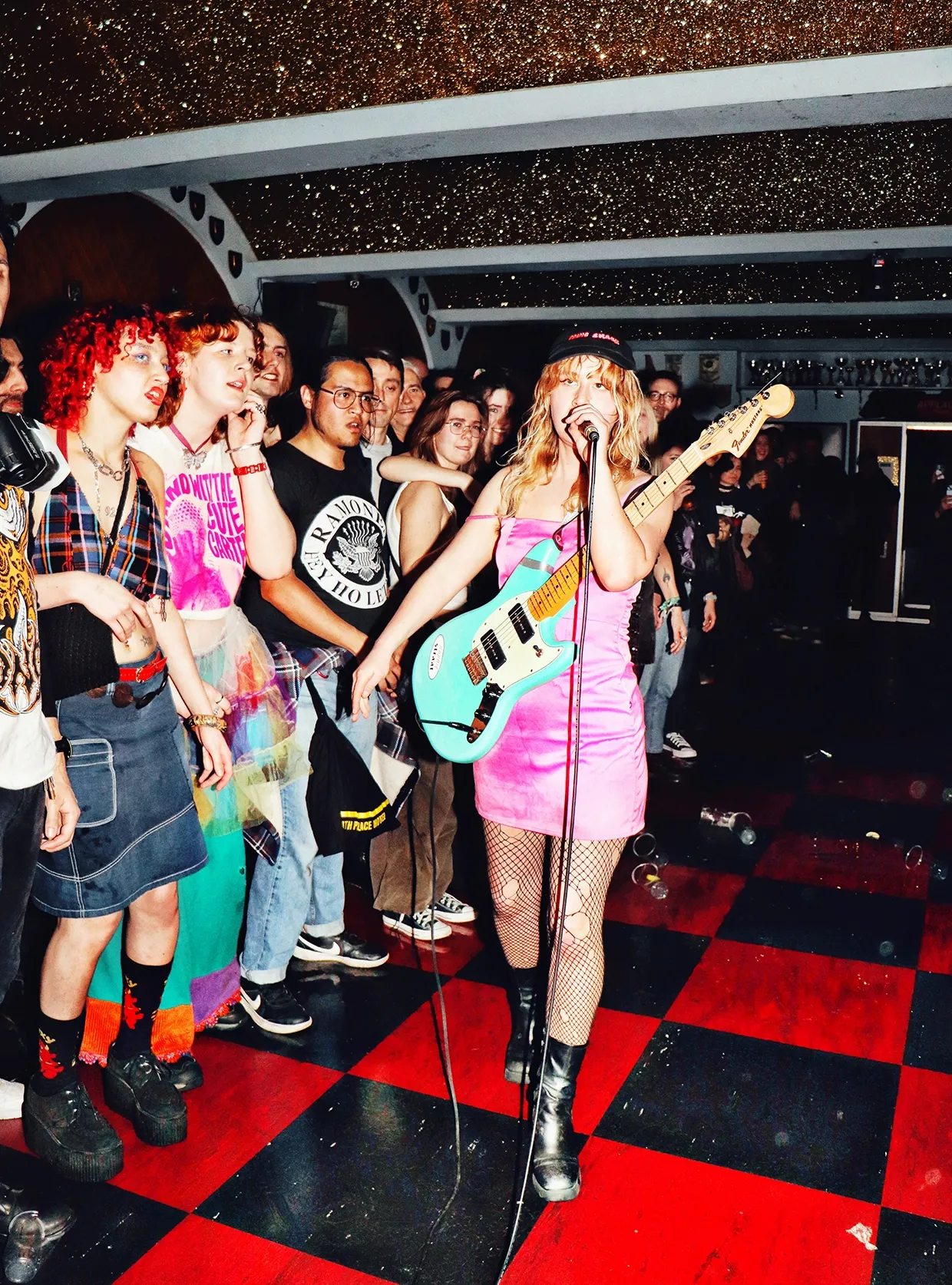
MOTH Club has hosted an array of legendary nights, including one in which Dave Grohl and Rick Astley shared a stage playing “Never Gonna Give You Up”. Kench-Andrews said she’d “give her right hand” to see that - or the likes of Lady Gaga playing an acoustic piano set “just in a T-shirt and jeans”.
Two separate planning applications have been submitted for blocks of flats next to the Valette Street venue, something campaigners say may prevent the club from running as normal.
One of the blocks would have balconies directly overlooking MOTH’s smoking area and would back onto the stage wall, which operators say would lead to noise complaints and potentially create an existential threat to the club.
For Kench-Andrews, MOTH remains a vital part of the make-up of Hackney Central and the wider community.
“I’ve had so many jobs in hospitality, and anyone that manages in hospitality will understand. Sometimes you really find your little spot,” she says. “I’d do anything for any of these people and it feels similar to how I imagine people wanted it to be when MOTH Club originated: somewhere for people to go.”


