

A cheese handbag, sandwiches arranged into shoes, a treasure hunt threading through bakeries and corner shops: this is what Hackney Art Week proposes as a portrait of the borough, and the proposition is not as frivolous as it sounds.
From 4 to 14 June, more than 130 artists will install themselves across some 60 venues — galleries, yes, but also hairdressers, pubs, ramen bars and cafés — for a festival that began last year with a fifth of those numbers and has, in twelve months, tripled in size. Admission is free: the premise is that art belongs wherever people already are.
Lisa Baker and Anna McHugh, who founded the festival, describe its character in a string of adjectives that, in another context, might curdle into marketing copy: “open, inclusive, vibrant, accessible and genuinely community led.”
What rescues the phrase is that the festival appears, on the evidence of its programme, to mean it. Baker and McHugh both live and work in the borough and were puzzled, they say, that Hackney — long since shorthand for a certain kind of London creative density — had never had an art week of its own. They started one. The second edition has grown to include exhibitions, spoken word, workshops, sound systems, performance and a borough-wide treasure hunt.
The decision to place work in everyday spaces was, the founders say, deliberate: art “within everyday spaces where people already spend time”. What surprised them was how many local businesses already showed art, or wanted to.
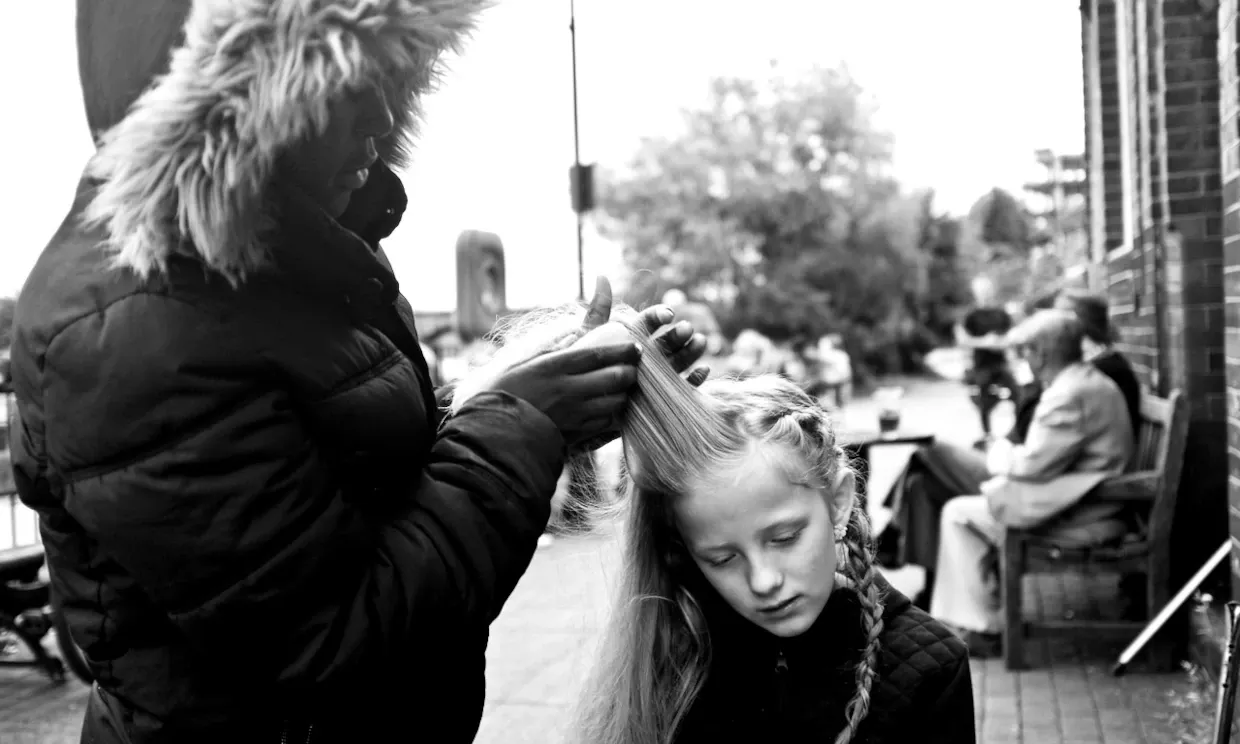
The programme itself reads like a map of the borough drawn by its tenants. GG the Illustrator continues her visual archive of council estates, with new work on Hackney's Morland Estate.
Martina O'Shea has built a multi-sensory installation about repair, memory and transmission at the recently reopened Raleigh Chapel.
Jonathan Schofield is hanging paintings at Albers; the ramen bar Tonkotsu is giving wall space to Annie Frost Nicholson; Dalston Curve Garden is showing photography by Manal Massalha; the pizzeria Lanterna is showing portraits by Ben Smith. On 6 and 7 June, the Dalston Cultural Quarter hosts open studios, a ceramics market and a street-level sound system.
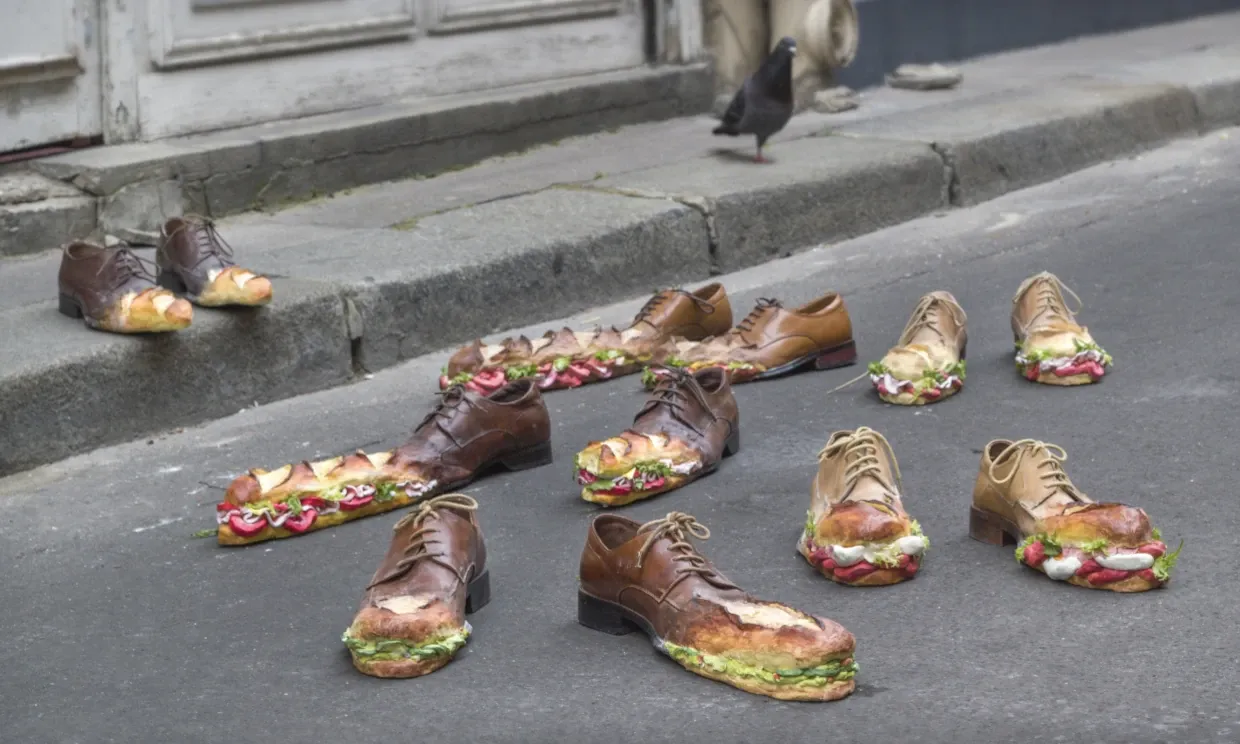
Some of the most arresting work sounds, on paper, the silliest. Jeanne Gourlaouen, presenting with Wilton Way Gallery, is unveiling The Sandwich Walk, an installation that fuses shoes and sandwiches and which she describes as reimagining “everyday life as a shifting choreography”.
Gourlaouen, who fell for East London last summer, talks about the area as somewhere art feels “so free and alive, more than anywhere else”. That this is being said about Dalston in 2026, after years of obituaries for the area's countercultural moment, is either touching or instructive, depending on your mood.
At ESEACC in The Old Bath House, the curator Mei Hui Liu has assembled a programme that braids contemporary art with food culture: exhibitions, screenings, markets and dumpling pop-ups, featuring Jun Jun, Bee Dwo Lin, Kelly Kiwi, Berlinda Chen and Ivy Mei. Liu has lived around East London for twenty-five years, moving through fashion, art and food, and her instinct for platforming younger artists shapes the week. She is also screening Love Infinity at the Rio — a documentary art film she has spent eight years making with the Oscar-winning artist Tim Yip.
Neither Baker nor McHugh pretends the climate is easy. They speak plainly about the pressure on artists, small businesses and hospitality venues, and the increasing difficulty of finding visibility.
Their answer, such as it is, is mutualist: get the artists, cafés, pubs, shops and cultural spaces talking to each other and supporting each other. The festival is built, they say, “on goodwill, collaboration and positive energy”. It is also throwing its weight behind Hackney Giving, a local charity programme, which felt to them the obvious partner.
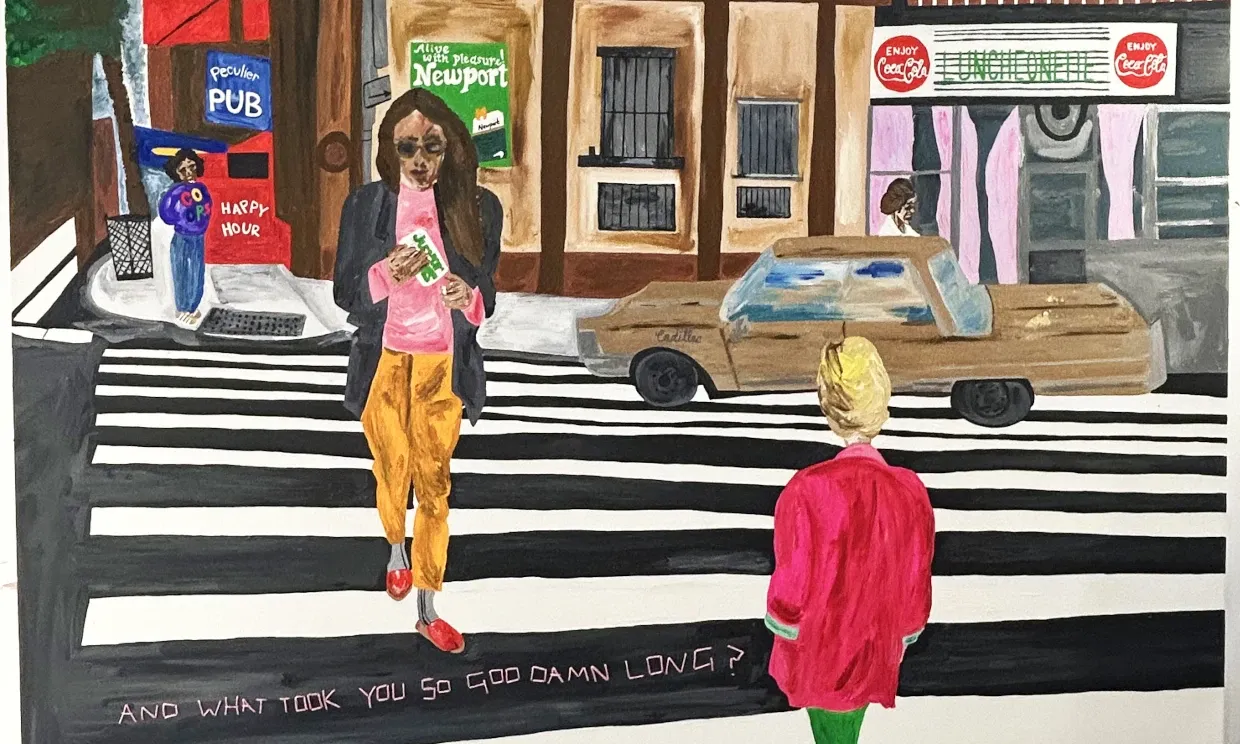
Further into the programme: photography by David Hughes; a night curated by the composer and DJ Gabriel Prokofiev; paintings by Kimberley Golding; and the treasure hunt itself, devised by Holly-Anne Buck, who works as Collagism™. Her artworks are to surface in bakeries, cinemas, corner shops and what she calls “unexpected corners of the neighbourhood”.
Buck wants, in her words, to encourage play, curiosity and surprise — a register that not all contemporary art is comfortable occupying. Alongside the hunt she is reviving her cult cheese handbag, first shown at Paris Fashion Week, as a limited-edition charity work for Hackney Giving,
“The handbag is such a loaded symbol for women - something we all carry every day - and each version becomes a kind of container for meaning. The cheese handbag came from a very real love of cheese. Any serious cheese lover can relate to that feeling of wanting a block of cheese the size of a handbag” - free of consequence, she says.
Other corners of the festival are more grave. At the Brutalist Rose Lipman Building in De Beauvoir, Anne McCloy is curating Salon of The Spectacle, with photography by Amelia Troubridge, live dance, and an immersive installation by Katie King.
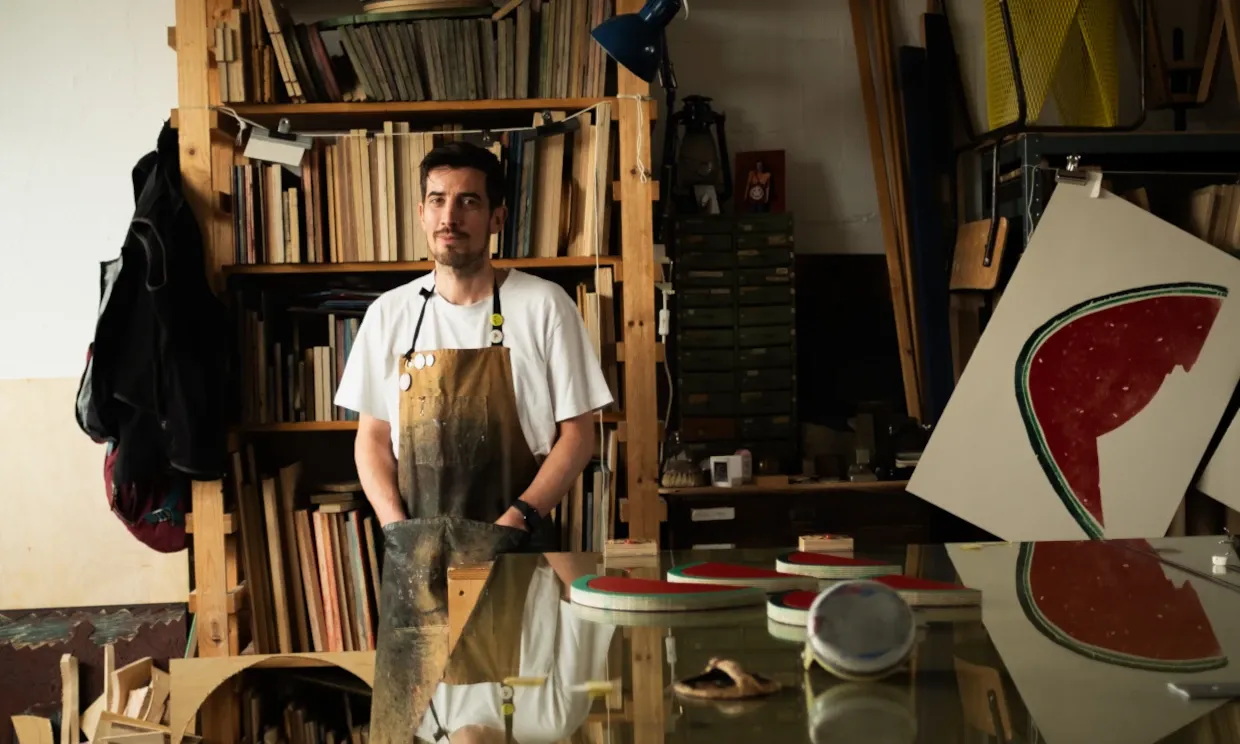
There are workshops: a woodcut session with Alex Booker; a collaborative ceramic piece, Place at the Table, by Henny Beaumont and Brigit Connolly; a writing workshop with Rosie Storey. Richard Yeboah is giving a talk on Hackney's history. The Prince George pub is hosting an “After Session" conversation with the writer and curator Hettie Judah.
The festival's emotional centre, though, may be Tara Darby's The White Cage, a new photography project shot at the Regent's Estate football pitch — one of Hackney's last remaining gang-neutral spaces. Darby, an NPG Portrait Award nominee, has built her work out of long hours spent on the astroturf, listening.
“The story of the cage touches on so many critical themes affecting Hackney residents right now: the effects of gentrification swallowing up whole neighbourhoods, the housing crisis and the urgent need for more spaces where young people can play outside and express themselves”, she says.
The cage, in her telling, is “freedom and release, a place to dream and escape and train”.
Through intimate portraits and lived stories, the work follows the young people, mentors and families who rely on the cage - a space that Darby deems a rare example of real inclusivity in the city.
“I spent a lot of time on the astro talking to people and discovering what the pitch means to them and the photographs happened naturally as that trust was built. The cage represents freedom and release: it's a place to dream, escape and train”, she says.
“I wanted to celebrate the people who use the cage and show why spaces like this matter so much. I hope that these images make people feel proud and help galvanise the community to protect an incredible asset on this estate.”
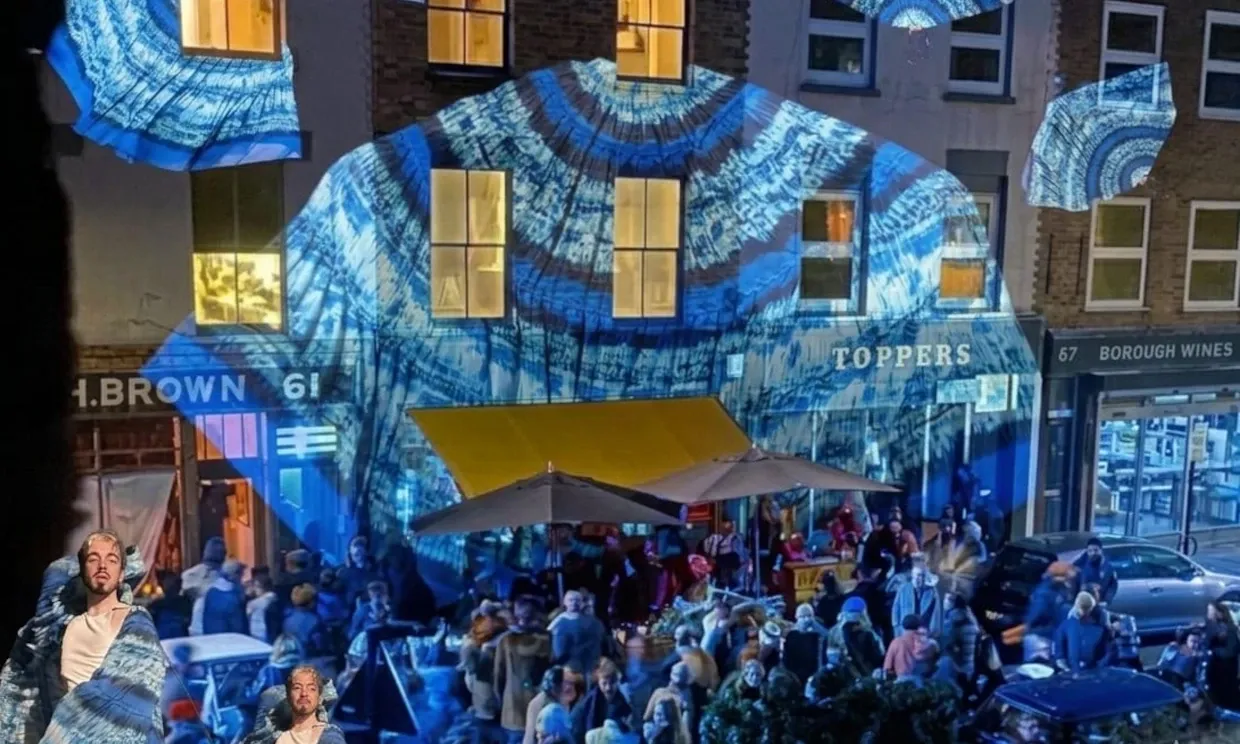
Claudi Panaite, meanwhile, is projecting a piece across Wilton Way, drawn from what she calls “states of frenzy” observed first in nature and then in human affairs. She frames her work as a quiet resistance: “In our current times, there is a vested cultural push to make us more isolated, systemised and beholden to a centralised power. I want to remind visitors that life is made beautiful by how we do our own thing while being interconnected with each other.”
The flowers in her projection are modelled on actual Hackney residents — artists, thinkers, neighbours she has come to know over the years.
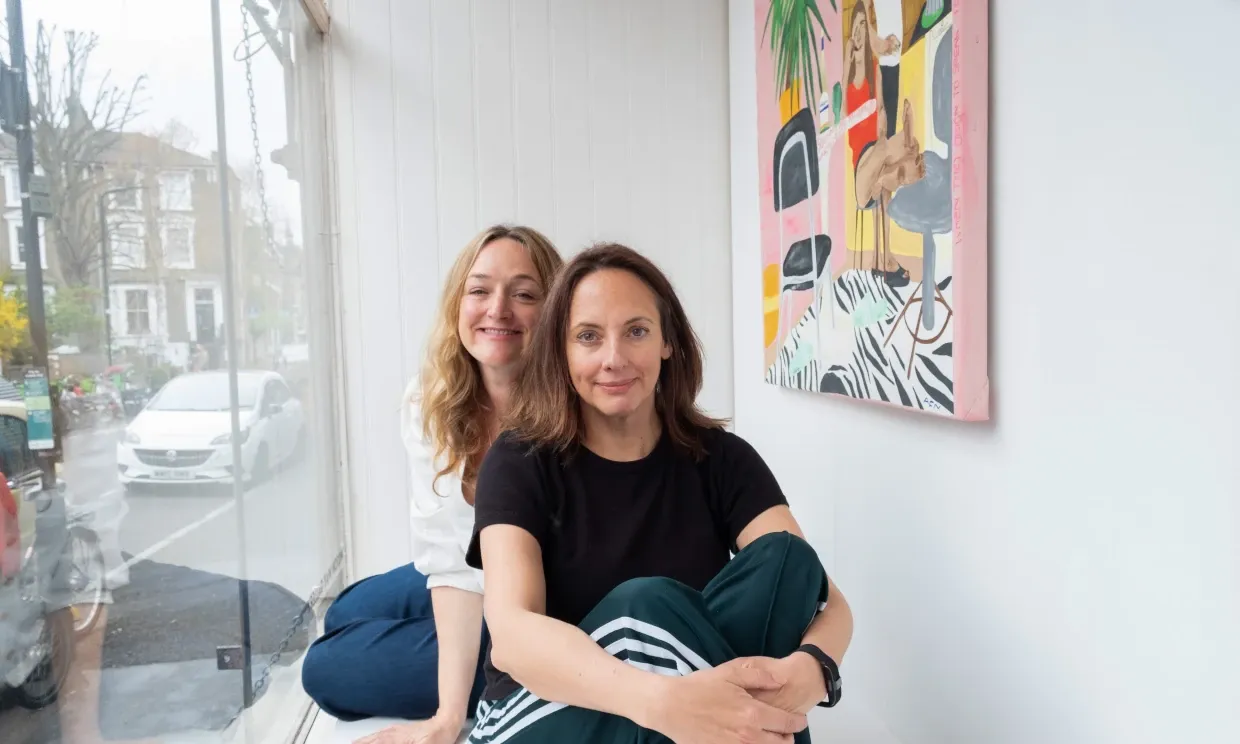
What ties the programme together is the structural fact that the festival is volunteer-led and artist-led, produced by people who have spent years in the borough. People built the website, drew the map, offered help.
Most residents, Baker and McHugh suggest, already know how creative the area is; the festival is less a discovery than a reinforcement, an act of collective self-recognition staged in pubs and cafés and one extraordinary football cage. Whether that recognition can arm the borough against the pressures bearing down on it is another question — but the answer, this June, is being attempted in public.
Hackney Art Week runs 4–14 June 2026 across Dalston, De Beauvoir, Clapton, London Fields, Hackney Wick, Haggerston and Stoke Newington.


