

“It was quite surreal to think that this imagery or symbolic thing felt like it was being used against me to say that I'm not from this country,” recalls Okiki Akinfe about the surge in St George’s flags last summer.
The artist is speaking to East End Review ahead of the opening of her debut institutional show RM9 5AN at Peer, opening on 23 May.
A love letter to her local high-street in Dagenham, Akinfe’s new body of work is a portrait of a place – specifically, the postcode district of RM9 5AN in Essex, just on the edges of London.
Featuring a new series of large-scale oil paintings and lightbox works, the exhibition continues Akinfe’s ongoing engagement with and critique of the constructions of identity, class and place.
Produced in a time of rising anti-migrant sentiment and a visible presence of the far-right on British streets, Akinfe’s new commission reimagines public space, defying the notion that it is something exclusionary or belonging to certain groups only.
While the experience was uncomfortable - “I felt almost unwelcomed in my own high street”, it ultimately shifted her perspective.
She reflects that the moment created “a juxtaposition where it kind of forced me to look at my high street more. I realised just how beautiful my high street is, from the diversity and the foods, to the people who have been there for so many years… I just thought - how can I represent what I see when I'm on this high street?”
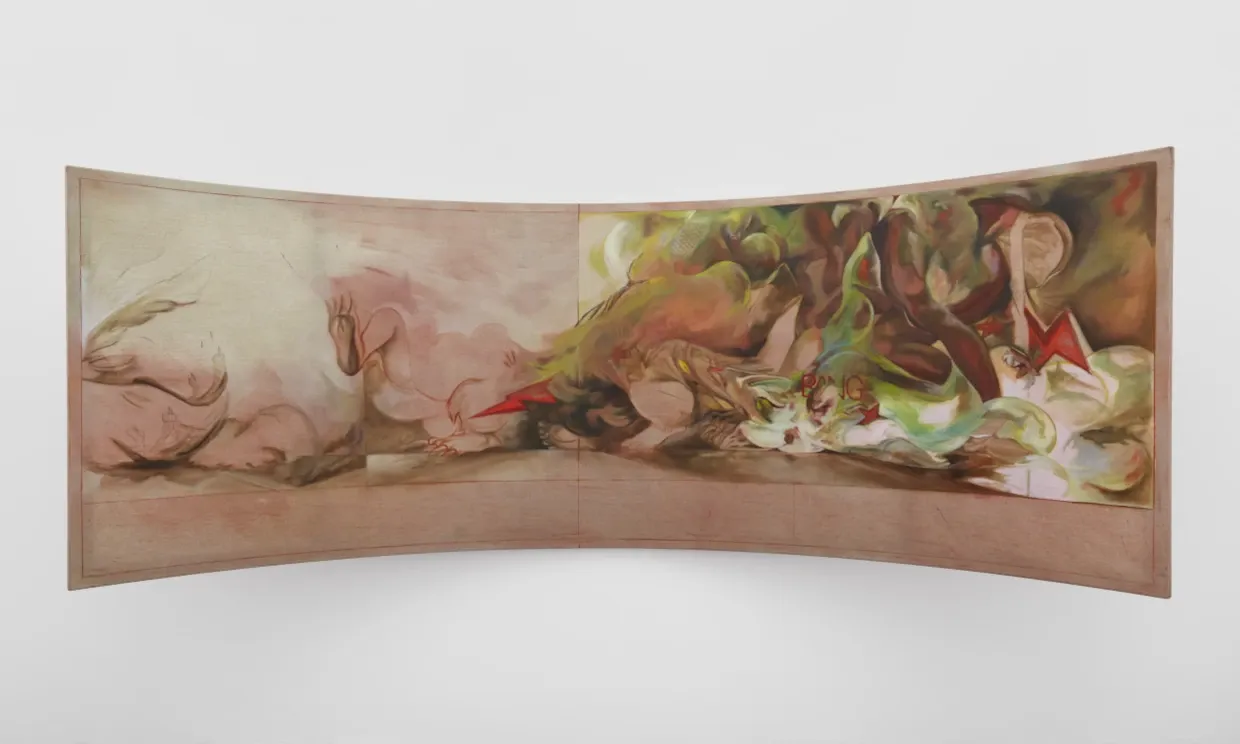
Akinfe cites Michaela Coel’s comedy sitcom Chewing Gum as a key influence for her new work. “It's essentially this love letter to her estate. I read somewhere that she [Coel] wanted it to be very quirky and kooky and to highlight the eccentric characters and the humility that you get in a local estate rather than the anti-social behaviour that is often publicised.”
For Akinfe, the show prompted her own response. “It just made me think: I want to do that. I want to have something that’s a love letter to my local high street.”
The exhibition draws on Essex’s history as a “beacon of hope” for working-class Londoners, with Akinfe’s paintings positioning the county as a site of possibility once again, now from the perspective of its newer West African communities.
Throughout the works, Akinfe focuses on fragments of everyday life such as shopfront signs, food stalls and places of worship, alongside what she calls “little keys”, signalling points of familiarity, from the loss of an Oyster card - “a very childhood in London experience” - to urban foxes and chicken and chip shop bags.
At the same time, she reflects on how such imagery has been politicised, recalling a government anti-knife crime campaign embedded in chicken shop packaging and the racialised stereotyping of certain communities.
“I remember thinking this was a clearly targeted perspective of the people who are eating chicken and chips. It felt like it was attacking a certain demographic, a certain class, framing them as the problem of knife crime. I feel like including these references in my work is having that conversation about who these places belong to.”
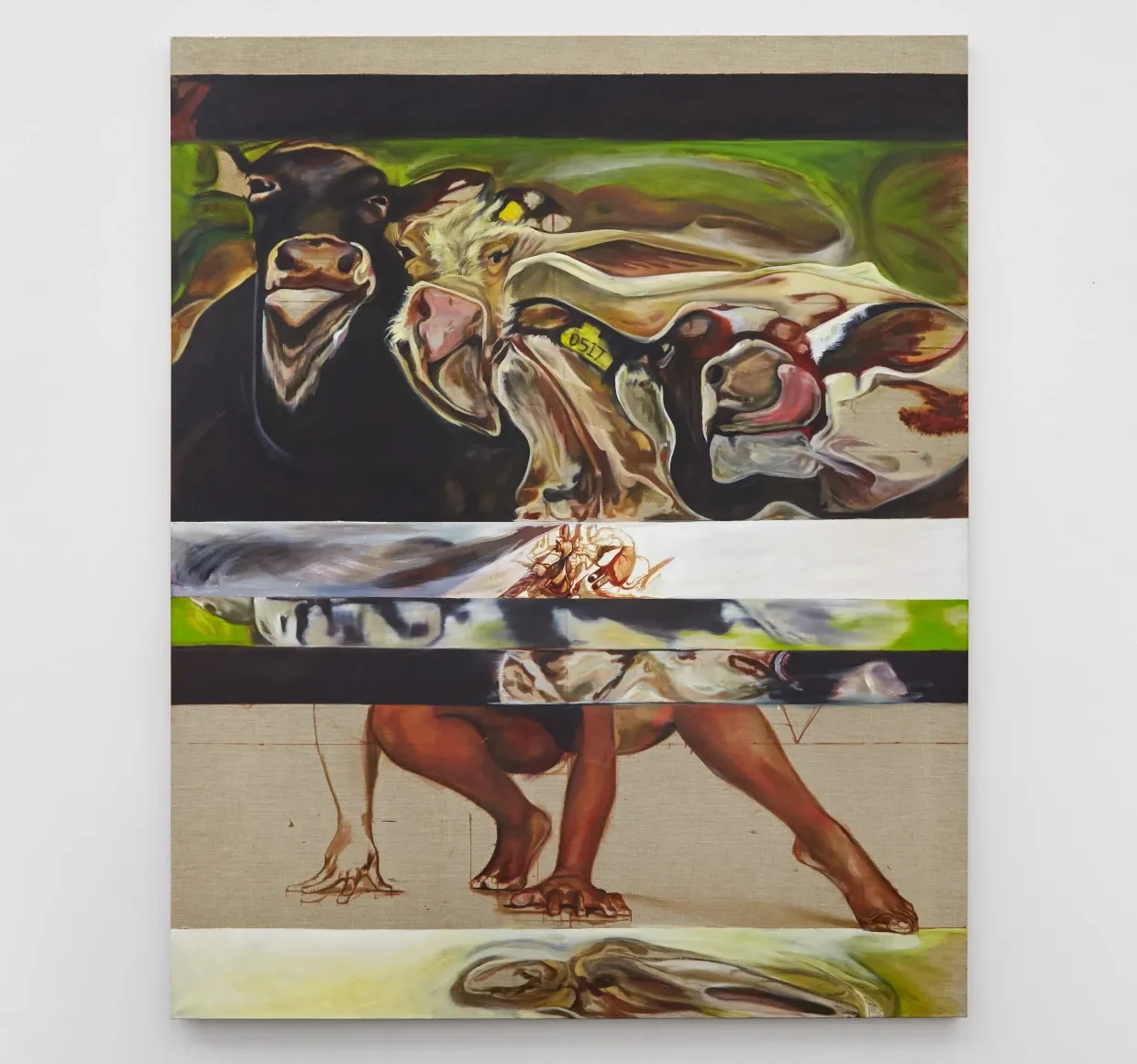
She continues: “And there are nods to parts of Britishness that, like the chicken and chip shop bags, sit under the umbrella of Britishness, but lend themselves to a conversation about the immigrant population who came here and set up life for themselves and made their own sort of diaspora and their own conversation.”
In this way, familiar high street signifiers become a way of thinking through belonging, migration and the construction of identity.
The question of belonging also carries into the human figures that appear in the work.
Speaking about the responsibility embedded in representation, Akinfe says: “I feel such a responsibility when I'm portraying Blackness in figures in my work because I didn't see Black figures in paintings when growing up that often and now I do and it's just amazing. I think there's such a sense of responsibility in there because I know what I've experienced and I know the experiences of others.”
“Even though Black people are not a monolith, I want to give the same agency to my figures in my work… it’s about me making sure those figures are thought for and cared for and I think that does partly lend to why there aren't faces normally seen. I think, one day, I will feel the need to put a face in the painting, but so far I just want them to have their own privacy and to be comfortable to have their own rest,” she adds.
“ I've read so much about this idea of rest as a form of resistance and the Sovereignty of Quiet by Kevin Quashie, and I just really want them to have that affordability of it.”
As her profile continues to grow - recently named to Forbes 30 Under 30 (Arts & Culture) 2026 and selected for British Art Show 10: A Chorus of Strangers, curated by Ekow Eshun, Akinfe remains humble.
“Wanting justice and equal rights… shouldn’t be seen as a scandalised political opinion but a call to human rights,” she says.
“I can’t speak for every artist, but we have the luxury of making things that are constantly on view and can touch people in ways other things might not. I think we have a responsibility to be aware of what’s happening around us, but also to understand the social weight of what we do and how important art can be in shaping conversation and driving change.”
RM9 5AN
23 May - 8 August 2026
Peer
97–99 Hoxton Street
N1 6QL


