

On 22 September 1999, Scottish painter and decorator Harry Stanley stopped off for a lemonade on his way home at his local Hackney pub, The Alexandria (now The Lauriston). He put a plastic bag on the table, holding a wooden table leg repaired by his brother that day.
Police received a tip-off about an Irish man in the pub with a sawn-off shotgun in a bag. Shuffling home, still recovering from a cancer operation that left 20 stitches in his stomach, Harry was shot dead from behind by two Met Police officers just 100 metres from his home.
What has followed is decades of institutional silence, a gruelling legal battle and a lack of justice for his family. Despite a 2004 jury verdict of unlawful killing, the decision was overturned the following year. The officers were reinstated, and an apology has never been issued.
Now, Hackney-based producer Tara Darby is revisiting the event with audio documentary Justice for Harry Stanley, airing on BBC Radio 4 on 15 July.
The documentary combines testimonies from neighbours with archival BBC recordings, including historical audio from Harry’s brother and his son. Tara also interviewed Harry’s widow, Irene, who still lives in the same house close to where Harry was killed.
Speaking to Tara about why she has decided to revisit Harry’s story now, she tells me her interest in the case was first sparked after seeing graffiti on Down Park Road, E8, in 2001, which is when she took the image above.
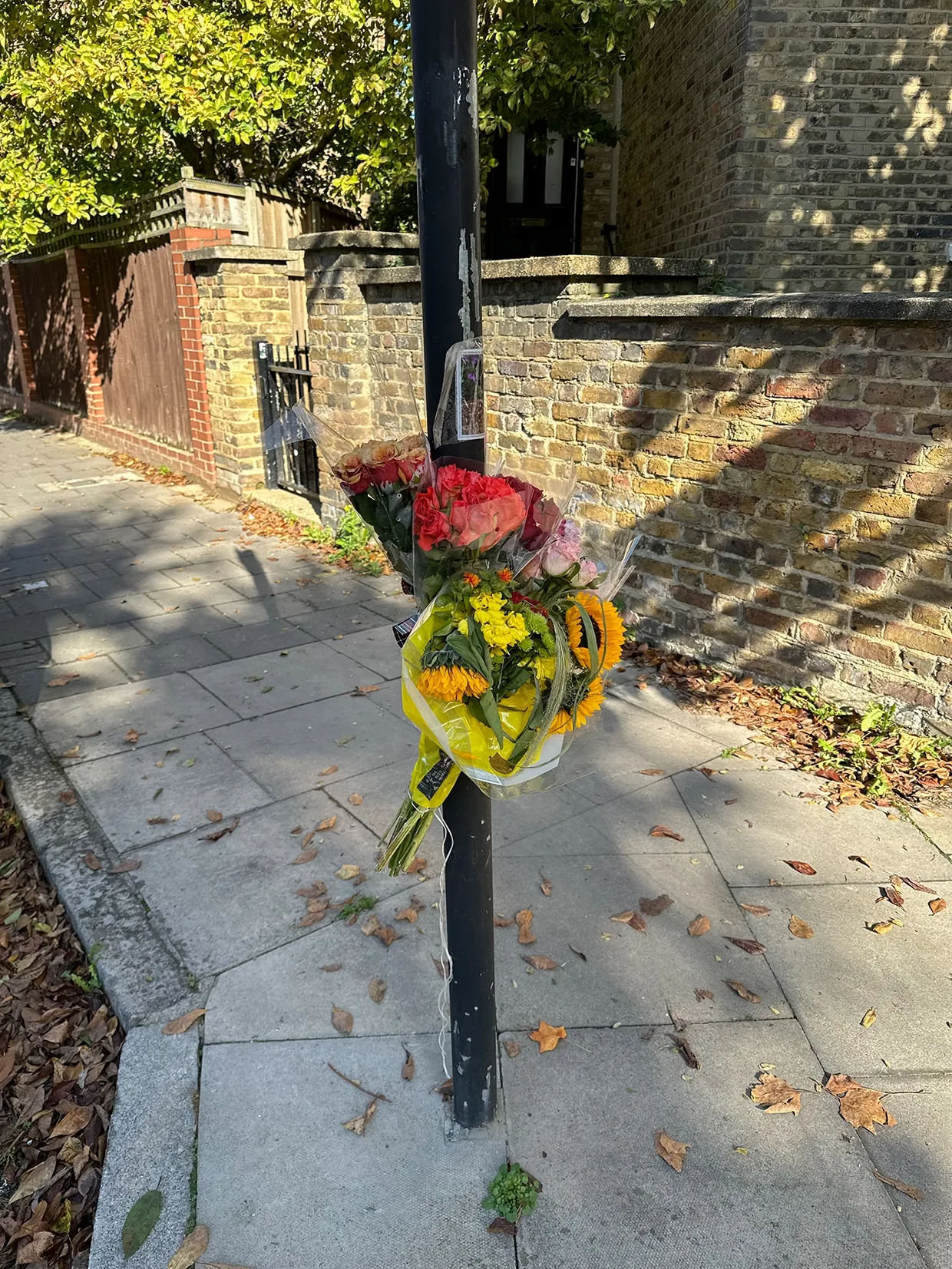
Years later, after moving to Victoria Park Road, she only realised she was living opposite the site of the shooting after seeing some flowers placed for the 25th anniversary of Harry’s death. “I was really shocked because there’s no memorial, there’s no marking. I’ve literally never heard anybody talk about it.”
With a background in photography and filmmaking, this is Tara’s first audio project, made during the ‘In the Dark Radio’ summer course. In May it was named among the winners of the Charles Parker Prize, selected for broadcast on BBC Radio 4’s New Storytellers series.
A community’s silence
Tara began by asking around her neighbours for information on Harry’s killing. “It became really apparent that a lot of people have not really spoken about it since it happened. It’s a common thing with something that traumatic. People don’t have any means of processing it.”
They recall hearing the shots from the street, with some seeing the uncovered body left there. Shockingly, they say police never went round knocking on doors for witness statements.
A memorial denied
Neighbours tried to get a memorial for Harry, but were denied by the council as the shooting happened on Crown Estate land. Meanwhile, a permanent memorial stands just a short walk away on Pownall Road for police officer Lawrence Brown, who was fatally shot in 1991.
“If he has a memorial, why is the same respect not extended to a victim of the Met police?” Tara asks. “If it’s human error, you need to apologise. His family’s life was blown up, and they’ve had no compensation, no apology, and no memorial.”
Not forgotten
By bringing this local tragedy back into the public eye, Tara hopes to prompt local MPs and councillors to re-engage with the event. At the very least, she hopes for Harry’s children, grandchildren and great-grandchildren still living in Hackney to know that their community has not forgotten.
Justice for Harry Stanley airs on 15 July, BBC Radio 4.


