

What do we treasure? This is the question behind Nina Dellow’s first solo exhibition at Praxis N16. Just before it opened, the Hackney-based artist took me through the gallery and talked about the assemblage of found objects, video, sound, and photographs around us.
The title she picked for the show is Bona Vacantia, the legal phrase designating ownerless goods, often those left by a person who has died with no will or relatives. Even if these are of small monetary worth, their cultural value remains to be explored, and the art on display here starts down this road.
Rich in symbolism, each of the works sheds a different light on the significance of ephemeral lives. As we walk around the space, Dellow points to key themes that pervade the exhibition: “What is important to us, valuing human life in its basic form, and compassion for other people. It is this idea of what is precious; there is a lot we can learn from things that are disintegrating, things that are imperfect or need scooping up”.
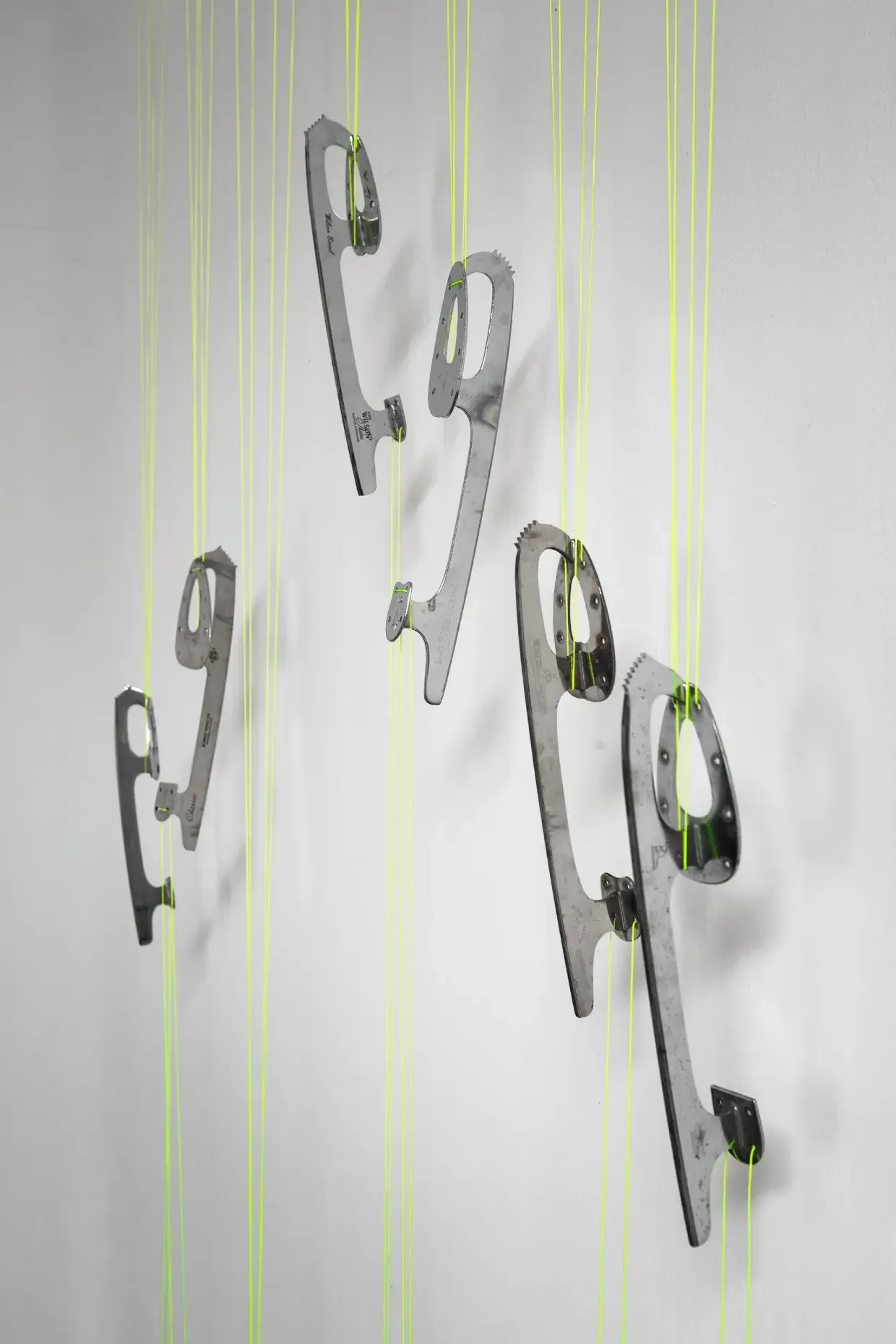
On one wall, Compulsory Figures (2026) is a group of ice-skate blades on cords which form a musical instrument that visitors can play by tapping the metal. Intrigued, I hear how skates sparked the idea behind the show when Dellow visited a flea market in south London and came across the possessions of a professional ice-skater called Joanne who had died. Joanne led her to think about the human condition: “I just felt this really strong connection for this stranger. It had her ice skates, it had one reel of super 8 footage, one reel of her practice skating music, and personal photographs. I did some more digging and I inhabited her as a character for a while. I recreated her costume, and I went back to the flea market dressed as Joanne and made a super 8 film out of it, and it really started as a prism to explore social and political ideas about ice and risk”.
Large against the far wall we see Bona Vacantia (2026), which incorporates a home video of a family trip to Antarctica in the 1960s with penguins slithering over icebergs that no longer exist, overlaid with moving shapes of a metal crushing factory of the same era which contributed to the iceberg’s demise.
“I'm looking at parallels with now, and how this creation and destruction process is a really important thing. It's really important in art, but it's something that we do as humans, and I'm really interested in that”, Dellow says.
Part of the same work is a soundtrack that plays in the background. This was made by splicing together ice-skater Joanne’s tape loops and then running them through her skates until they disintegrated. “A form of recycling”, as Dellow puts it, and she has made the resulting track into a record, also on display – “one redundant tech to another analogue tech”.
This sort of recycling might be a metaphor for Praxis gallery itself, a former garment factory now put to creative use as artist studios and exhibition space. Place is clearly important for Dellow who values the artistic community in Hackney, and the opportunity to work with a gallery with a focus on experimental work.
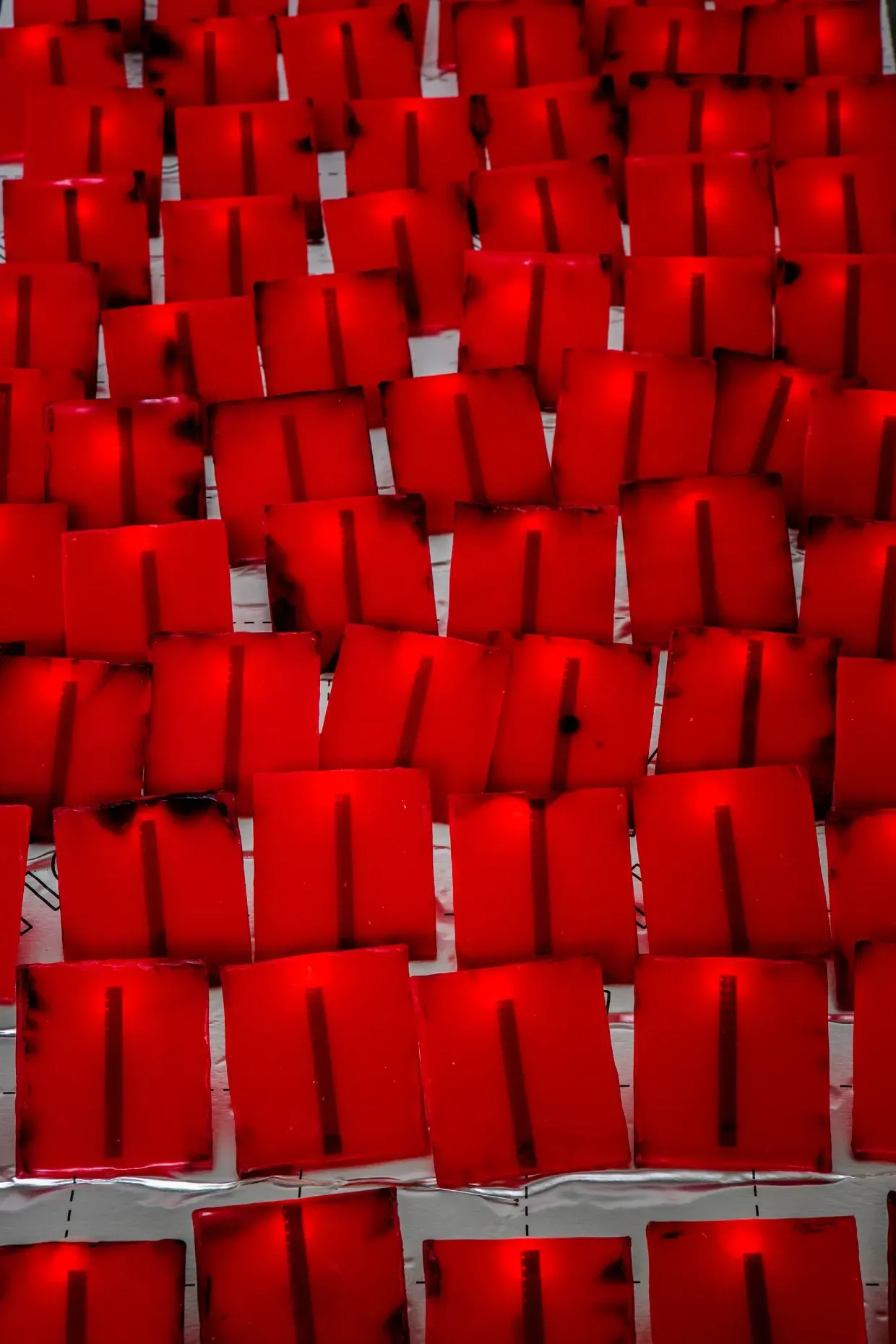
Her characterisation of her art as ‘experimental’ is apposite; I can certainly relate to the super 8 videos and the old photos, but I’m glad to have some of what I see interpreted. The rows of small red squares on a bed of shiny silver that make up The Glorious Dance (Your Ass Off) (2026) would have had me utterly baffled had Dellow not shown me that embedded in each square (of dental wax) is 18 frames of super 8 film of people dancing, with the 74 wax relics representing the lifespan of a human being.
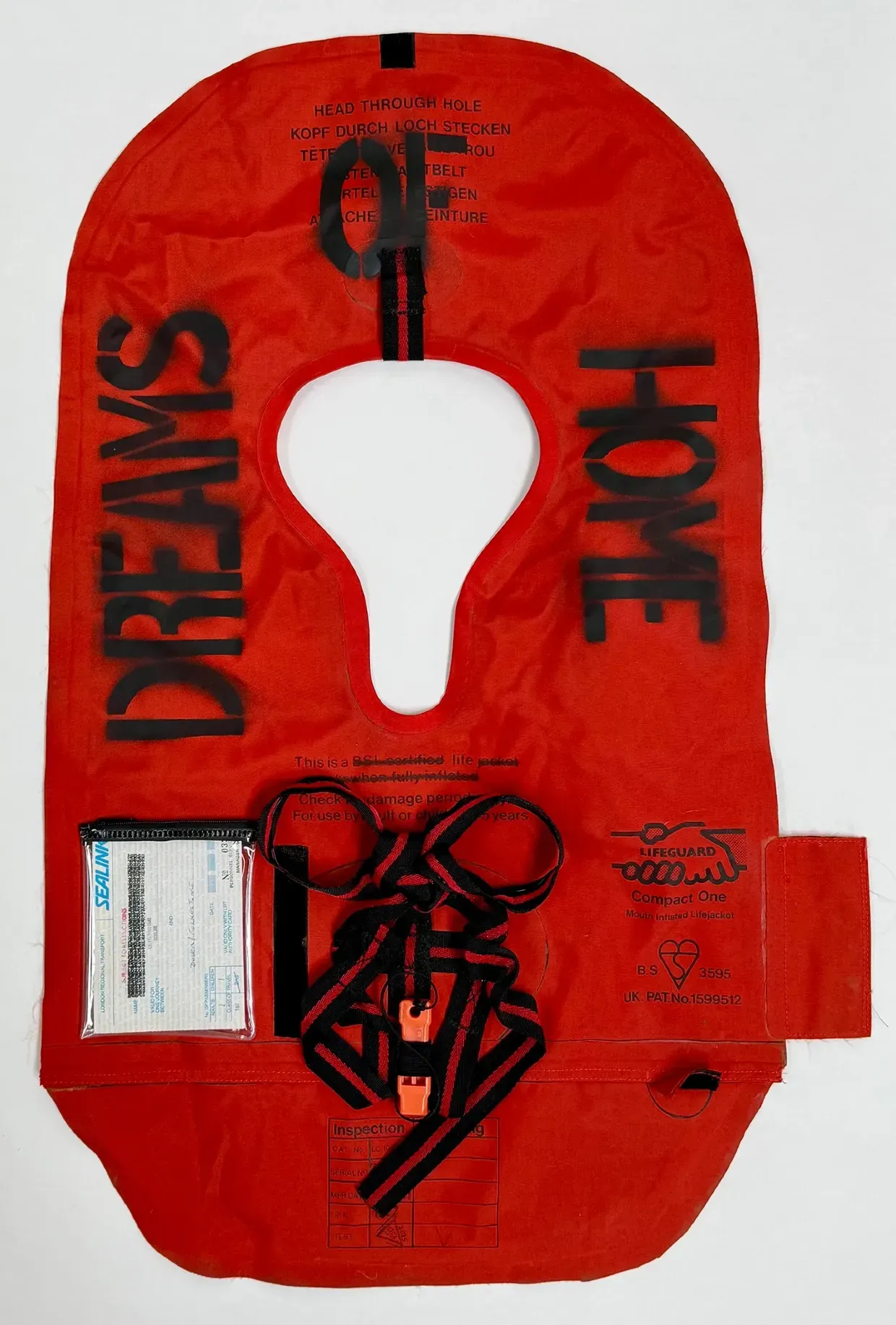
A sense of life on the edge of loss lingers in the gallery as I move toward the exit. The human condition is perhaps most succinctly summed up here in Life Vestments (2025), a display of red lifejackets with words stamped on them, including ‘HOME’, ‘DREAMS’ and ‘HOPE’. Are these the ideas that save us, or are they the last things we cherish as we drown?
Nina Dellow: Bona Vacantia
Until 31 March
Praxis N16
3-9 Belfast Road, N16 6UN


