

If you go looking for Juniper Street in E1, you’ll find a little stub of road off King David Lane that soon peters out into a walkway between modern housing blocks.
This short stretch of cobbles is all that remains of a street that was still, in the 1950s, home to a tightly knit community of dockers and their families who built a world in the narrow lanes of Shadwell.
Henry Say was among the last generation to grow up on Juniper Street, and he has taken its name as the title of his newly released memoir.
Born in 1949, when London was still pocked with piles of rubble and ruined buildings, Henry experienced London very differently from children today.

Bomb sites were resources from which to fashion homemade go-karts or to melt down lead over fires. Entertainment consisted of street games, roller skating, trips to the Victoria Park Lido and, of course, the Troxy Cinema.
The 1950s were also a time when mod cons were arriving to universal delight. We learn of the excitement that toothpaste generated when it replaced powder. Gas fires displaced coal, much to the benefit of young lungs.
And for women, who were invariably responsible for household chores, the advent of the laundrette marked a major liberation.

Local identity is a strong theme in Say’s account, but the East End community he describes was already under threat of dispersal as containerisation of the shipping industry gradually took jobs out of the docks.
As Say puts it, “the great machine that had powered the East End for generations was winding down, piece by piece”.
The sense of impending doom as young Henry approaches adolescence gives the memoir a slightly elegiac tone, but the sheer delight of childhood adventures in post-war streets and alleyways also shines through.
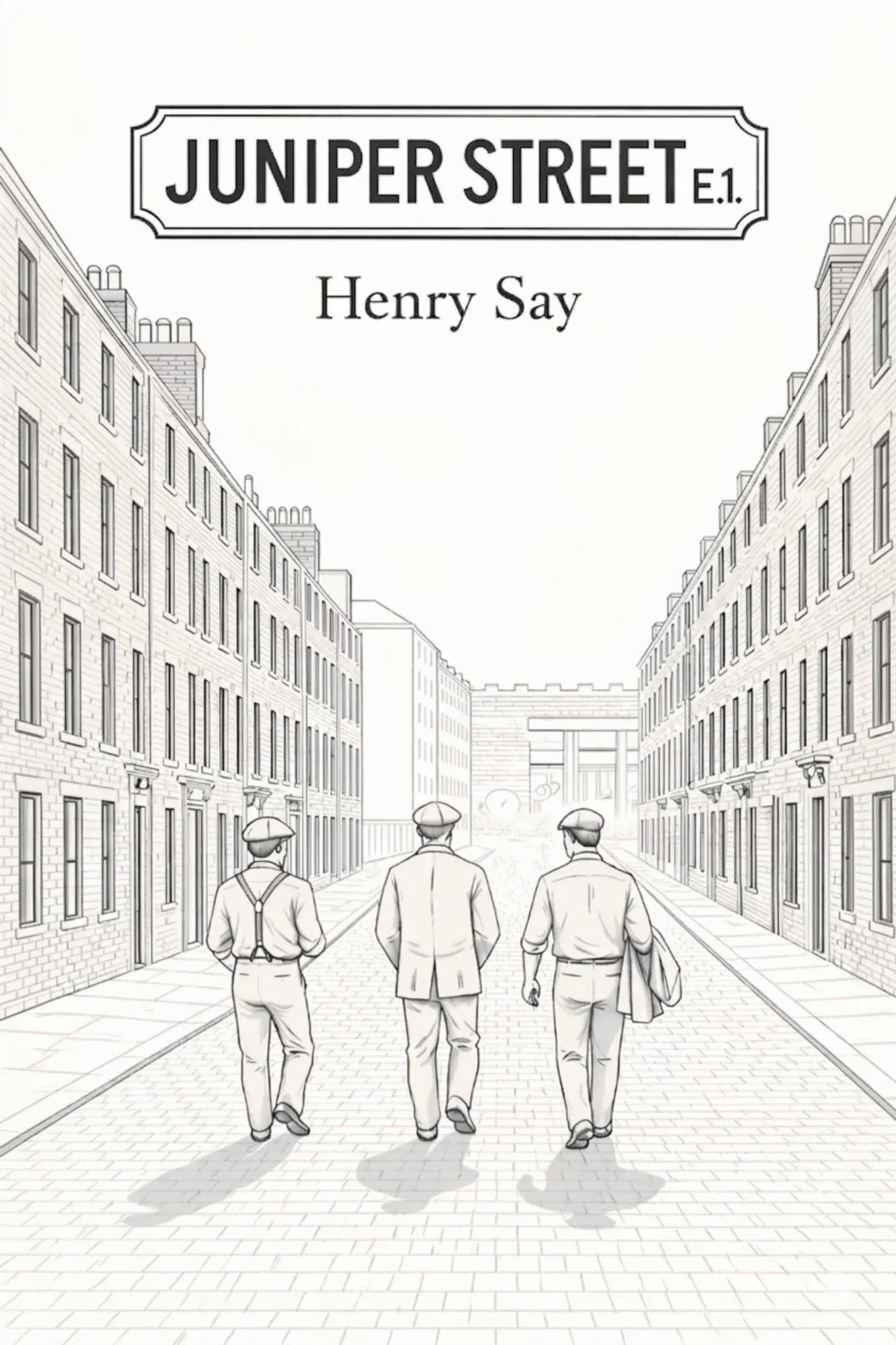
Say’s vivid prose is accompanied by enchanting line drawings of buildings and streets. With chapters divided by theme rather than by chronology, the narrative jumps back and forth in time in ways that are at times confusing.
But the firm focus on depicting a lost neighbourhood in loving detail makes this an evocative portrait of an East End that has all but disappeared.
Juniper Street E.1. by Henry Say is published by Prime Cadence. ISBN: 978-1-0369-5043-9; RRP: £11.99.


