

Like many of today’s London suburbs, Hackney was once a rural community with scattered hamlets, market gardens and rolling pastures where cattle grazed. The River Lea ran lazily through it, surrounded by open marshland.
The first disruption came in 1707, when a mill opened at Lea Bridge. By the 19th century, the west bank of the river had become lined with timber yards, providing wood for the burgeoning furniture industry. The arrival of the railways in the second half of the 19th century brought the second disruption. Hackney’s population grew rapidly, boosted, in part, by Jewish migrants, who’d found some prosperity and moved out of Whitechapel.
Gabriel Rimel came into this community at the turn of the 20th century. In 1894, he married Manie (later known as Milly) and they went on to have 10 children. That included Esther, known as Hetty, who was born in 1905.
When war broke out in 1914, nine-year-old Hetty joined in the patriotism, standing on the streets waving the men off to the frontlines. She saw those same men return, mutilated. In an interview with the Stop the War Coalition many decades later she could still remember the moment when it all changed for her: “During war the real horror strikes you, and it leaves a scar that a child cannot forget. Men’s legs and arms were blown off and I can recall, at age nine, asking … why? Nobody could give me a satisfactory answer”. At 17, Hetty joined the newly emerged Labour Party. She went on to take part in every major political event of the early 20th century, from the 1926 General Strike to the Battle of Cable Street in 1936. But it was her anti-war work she became renowned for.
WW2
On 3 September 1939, Hetty’s father told her: “Oh, they’ve declared war! Now the lies will begin”. Hetty still felt there was no logic in military conflict; no good reason for humans killing each other.
As a committed internationalist, she turned her focus to Czechoslovakia. During the 1930s, Prague had a flourishing Jewish community. When Hitler came to power in Germany, many more arrived as refugees. In 1939, Germany invaded, and between 1941 and 1945, over 46,000 Jews were deported from the city to a ghetto in Theresienstadt. From here, they were transported to Auschwitz for extermination. Back in East Finchley, Hetty volunteered at a refugee hostel for “trade unionists, socialists, communists, Jews, and anyone else they could get out of Czechoslovakia”. She made such an impact, she ended up running the whole operation.
On 6 August 1945, the first atomic bomb was dropped on the Japanese city of Hiroshima. Three days later, a second dropped on Nagasaki. Hundreds of thousands lost their lives. The atomic age had begun.
CND and the nuclear threat
In the 1950s, Europe was gripped by fear of nuclear conflict. At a mass public meeting in February 1958, the Campaign for Nuclear Disarmament (CND) launched. It attracted people from all walks of society, from scientists all too well aware of the dangers posed to religious leaders. Having survived two world wars already, Hetty Bower was one of the first to join its campaign for multilateral disarmament.
The following Easter weekend, CND organised a mass march. It went from the Atomic Weapons Research Establishment in Aldermaston in Berkshire to London, a distance of 52 miles. Thousands participated, and it became an annual event. At its peak in the 1960s, the march attracted 40,000 people, and 100,000 attended the final rally in Trafalgar Square. Hetty was there on the first march, and 50 years later was still marching. Her only complaint was that people didn’t walk fast enough. “Why shouldn’t I march”, the centenarian said. “I’ve got good legs!”
The Iraq War
On 11 September 2001, Al-Qaeda carried out four coordinated terror attacks against the United States. Governments worldwide denounced the strikes. Prime Minister Tony Blair flew to Washington to affirm British solidarity with the US. The US government announced its ‘war on terror’.
The proposed war was deeply controversial. Around the world, anti-war protestors organised. They called for a global day of action on 15 February 2003. In the UK, this was coordinated by the Stop the War Coalition. Amongst its supporters were Labour MPs Tony Benn, George Galloway and Jeremy Corbyn, as well as author and journalist Tariq Ali, playwright Harold Pinter, and leading trade unionists. And of course Hetty, now nearly 100.
On that grey, extremely cold day in February, she marched alongside her two daughters – Margie and Celia – and an estimated million others. Despite the number of historic events she’d been part of, this was by far the largest.
The Iraq war was a turning point for Hetty. Despite being a Labour Party member for over 80 years, she resigned her membership. In an interview with the Stop the War Coalition she didn’t mince her words: “Tony Blair is a Catholic. How can he believe in God when he killed so many people?”
Nobody knows better than Hetty Bower that it will always take more than one protest to change anything. In the 10 years following the 2003 day of action, she marched nearly 30 times to oppose war, nuclear weapons, and against Israel’s oppression of the Palestinians. In 2008, aged 102, she was still fighting for peace, speaking at the Hiroshima Commemoration Day in Tavistock Square. At 106, she walked three miles in St Albans, Hertfordshire to raise money for Palestinian children in Oxfam’s Annual Herts Hike.
Hetty didn’t limit herself to peace campaigns. In 2010, she marched against the closure of Whittington Hospital, where her daughter Margie was born and where Hetty herself later had a hip replacement.
She could remember it from the pre-NHS days, as a workhouse infirmary. In 2013, she spoke at the Labour Party conference. Leaving barely a dry eye in the house, she spoke about the days before the NHS with painful clarity.
“Families were forced to choose between buying medicine for their children, or a loaf of bread”, she remembered. ‘We must never ever go back to those days.’
She told the conference delegates that whatever time she had left on this planet she would dedicate to the fight, urging them to do the same.
“We may not win”, she said. “But if we do not protest we will lose”. Her speech received a standing ovation.
A few months after the Labour party conference, Hetty had a stroke as she was about to leave home to speak at a primary school.
As she lay in hospital with her family around her, she sang the old CND standard, The H-Bomb’s Thunder. Wagging her finger, she said: “Ban the bomb, forever more”. At 108, they were her final words.
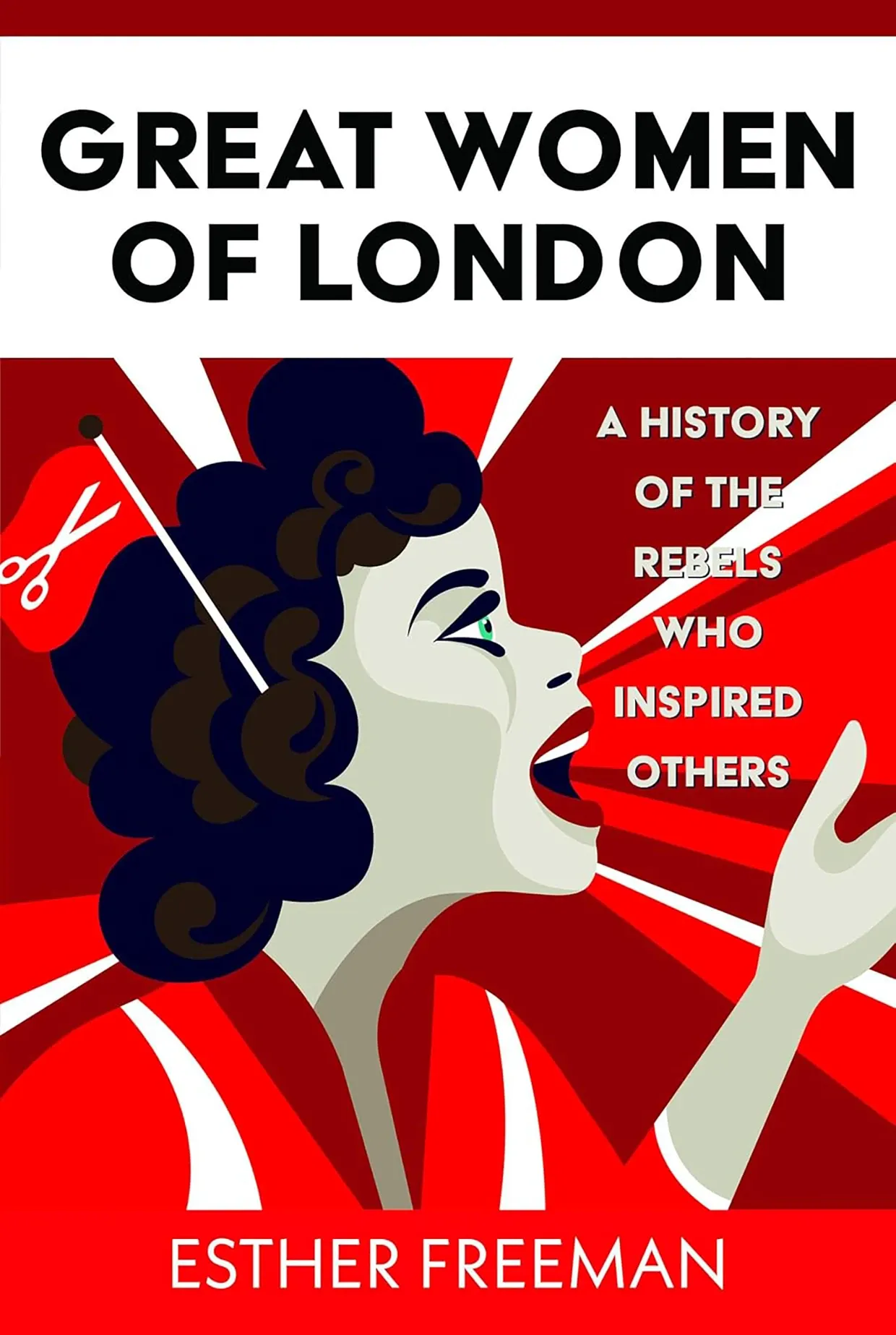
Extract from Great Women of London: A History of the Rebels Who Inspired Others.
Available to purchase online at Pen and Sword.


