

Aspot of filicide on Monday evening? Don’t mind if I do. The Arcola combines
established talent while reinvigorating Euripides’s 2,430-year-old classic.
Spoilers aside, this play has been done to death, so how do we reshape and revitalise it? A basement is initially a roadblock to the stuffy, stranded Greek army in Aulis, waiting for a breeze that seems never to come to spirit them over to Troy to burn and maim.
But here Melpomene (Muse of Tragedy) steps in, in the guise of Mona Camille’s
bellowing sail on the back wall and a limpid pool of reflective silver on the floor. The rippling light sinks into the folds of satin on the backs of the womenfolk and deflects off the hard lines of the man’s modern-era navy uniform.
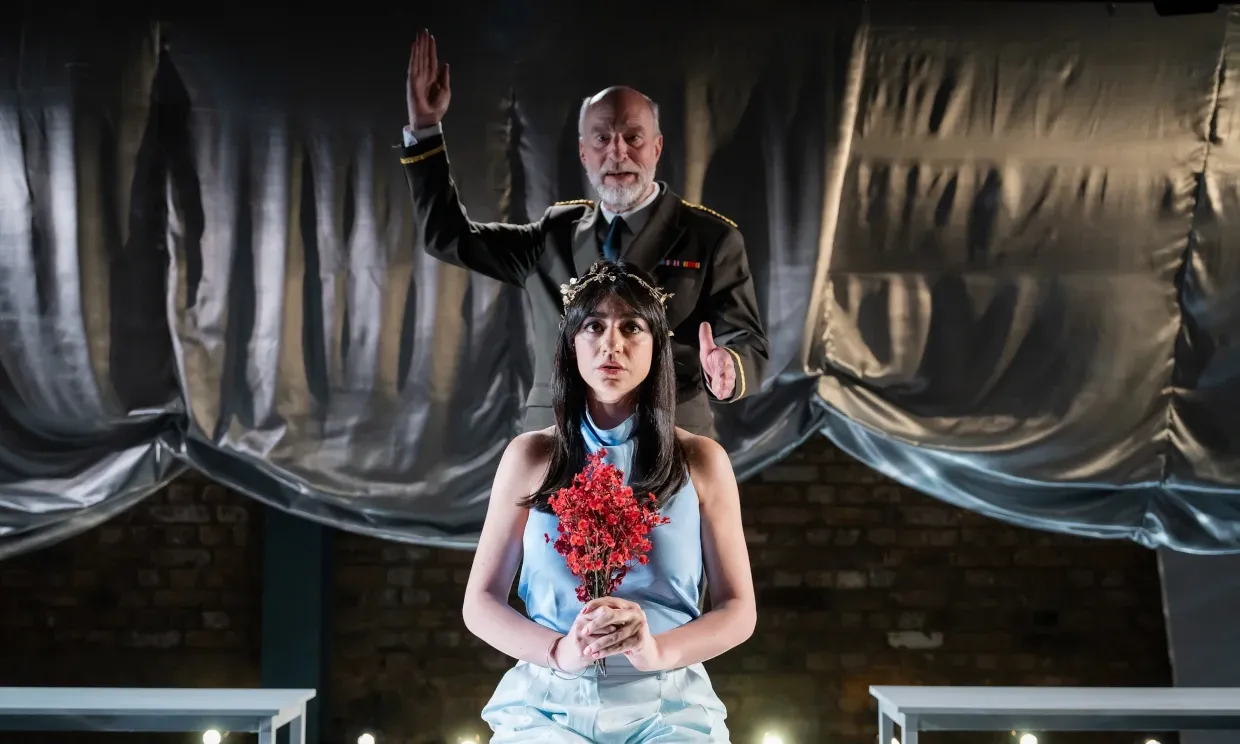
Kalia Lyraki is stage left, playing the flute and breaking out into trilling Eastern Mediterranean singing. A native Cretan, her composition and performance ensure auditory impeccability. We are transported to the late Bronze Age.
Simon Kunz, a seasoned actor, roars that distinctive Greek growl as the conflicted but loyal king Agamemnon. Serdar Biliş’s direction and adaptation, alongside Stephen Sharkey’s English revision plays with the prophesied journey.
Starting the preset on his phone to his son who is asking for money, Kunz explains the story via EarPods, slowly lengthening his spine into the furious general. We are now back in the digital age.
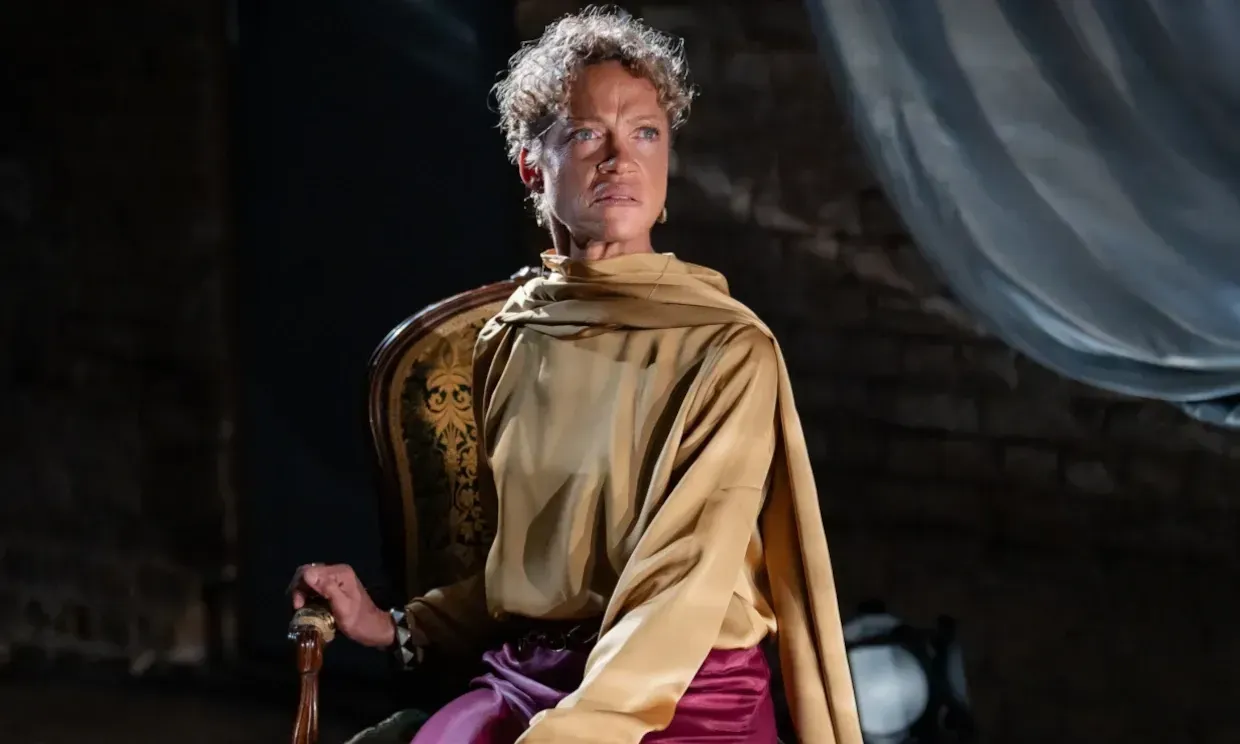
Sometimes poignantly, sometimes incongruously, the three actors repeatedly collapse back into “themselves” (or however much one can be on stage), talking straight to us about various family memories. Combined with projected interviews with women affected by the themes of the play – including, most smartingly, the recent war in the Gulf – this reframes the story into a transhistorical tale of conflict and sacrifice.
Indra Ové is shakingly intense as Clytemnestra, her royal pose lashing out at her husband’s decision and her own powerlessness. Mithra Malek is the eponymous daughter. Both older actors strike the difficult balance between epic delivery and heightened naturalism, between the classical and the contemporary – no easy task.
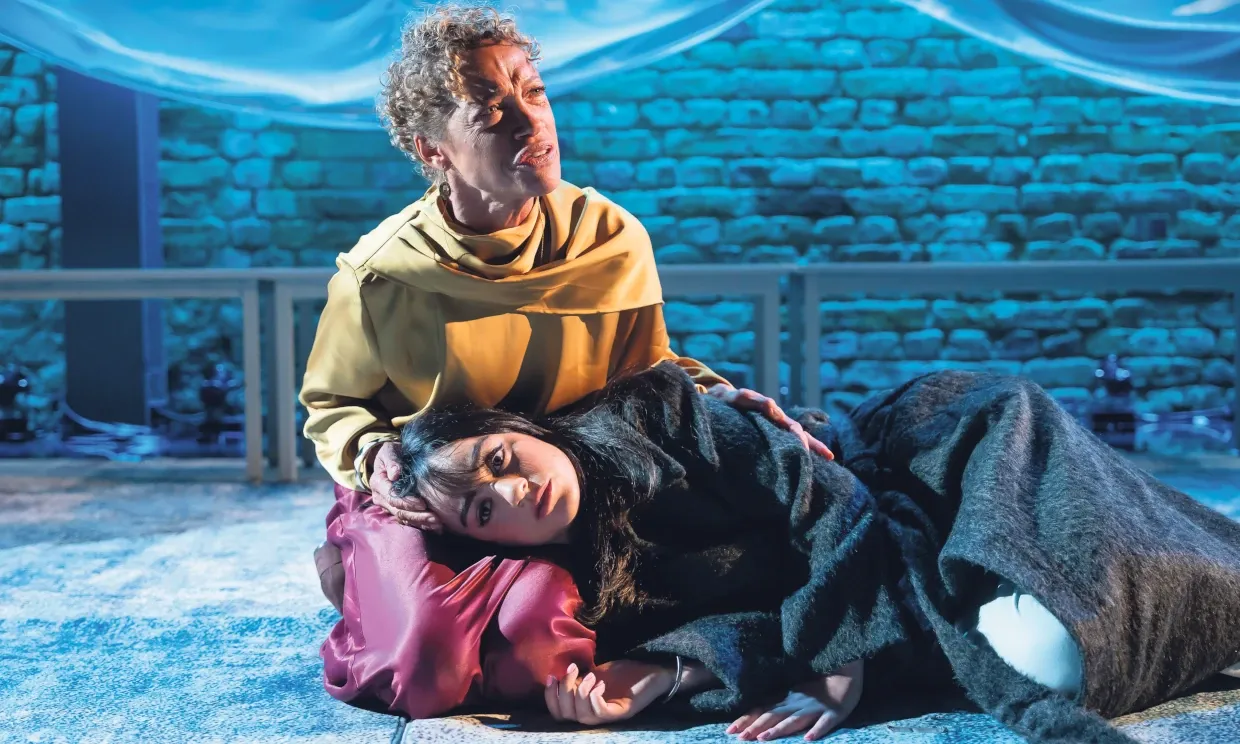
Small tweaks could allow the piece to really set sail, including allowing the rigging to flap when the dearly bought wind rises, and sharpening some sound and lighting cues. The interviews, at points, feel a little leading, and the real people’s comic incredulity at being asked to kill their children isn’t helpful.
However, the section where a woman talks about her martyred son makes up for any mumbling moments, as she calmly describes the blood-soaked ground. The cost of war is etched on everyone’s face, both real and pretended. The themes bend almost to breaking point to deliver a satisfactory blow. A basement is a port, three people are both royal and pedestrian; we are in ancient Greece, then in modern-day Iran, Turkey and Palestine. Tragedy proves to be eternal.
Iphigenia
Until 2 May
Arcola Theatre
24 Ashwin Stret, E8 3DL


