

A six-metre-high immersive installation offering a bee’s-eye view of Barking Riverside will be unveiled on 12 September.
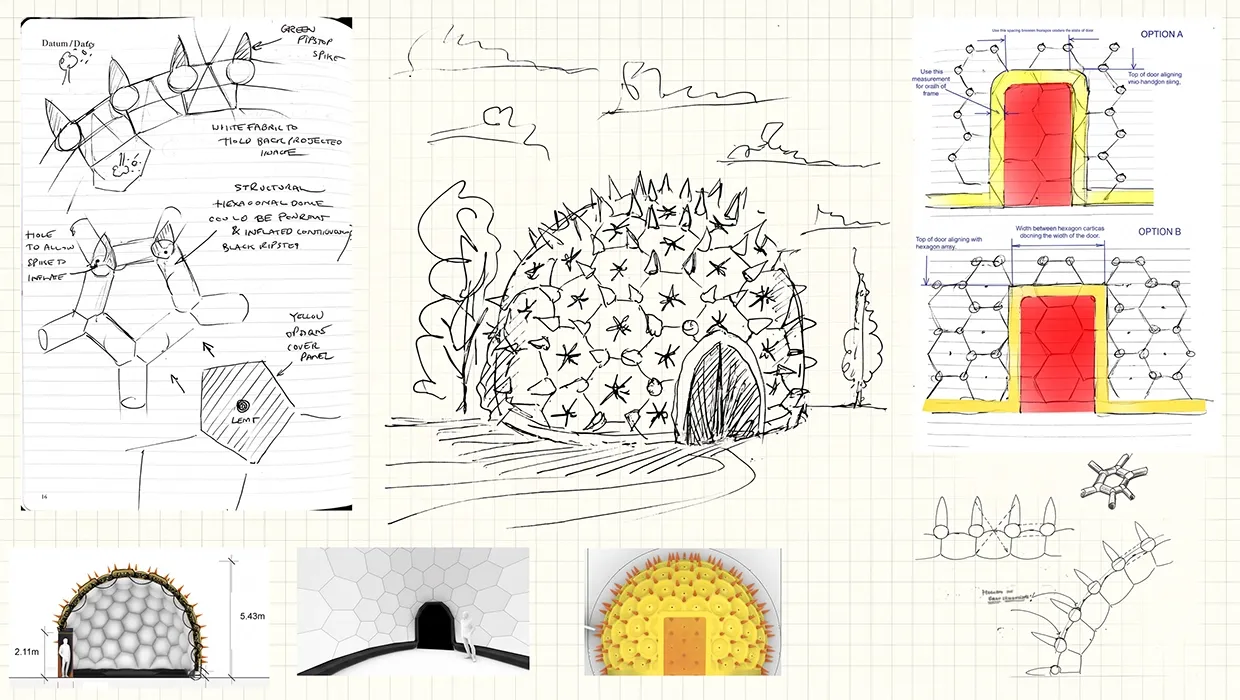
Titled Pollenarium, the new piece by Bristol-born artist Luke Jerram scales up a microscopic grain of pollen into a giant inflatable dome. Built in collaboration with US design studio Pneuhaus, the structure contains more than 100 camera obscura glass lenses across its surface, allowing visitors to see the outside world projected upside down.
On our call, Luke holds up a cardboard box prototype of one of the lenses for me to see. Reflected back is a topsy-turvy image of the room, with the focus changing as he pushes on the glass – something visitors will be able to replicate inside the dome. It’s pretty neat.
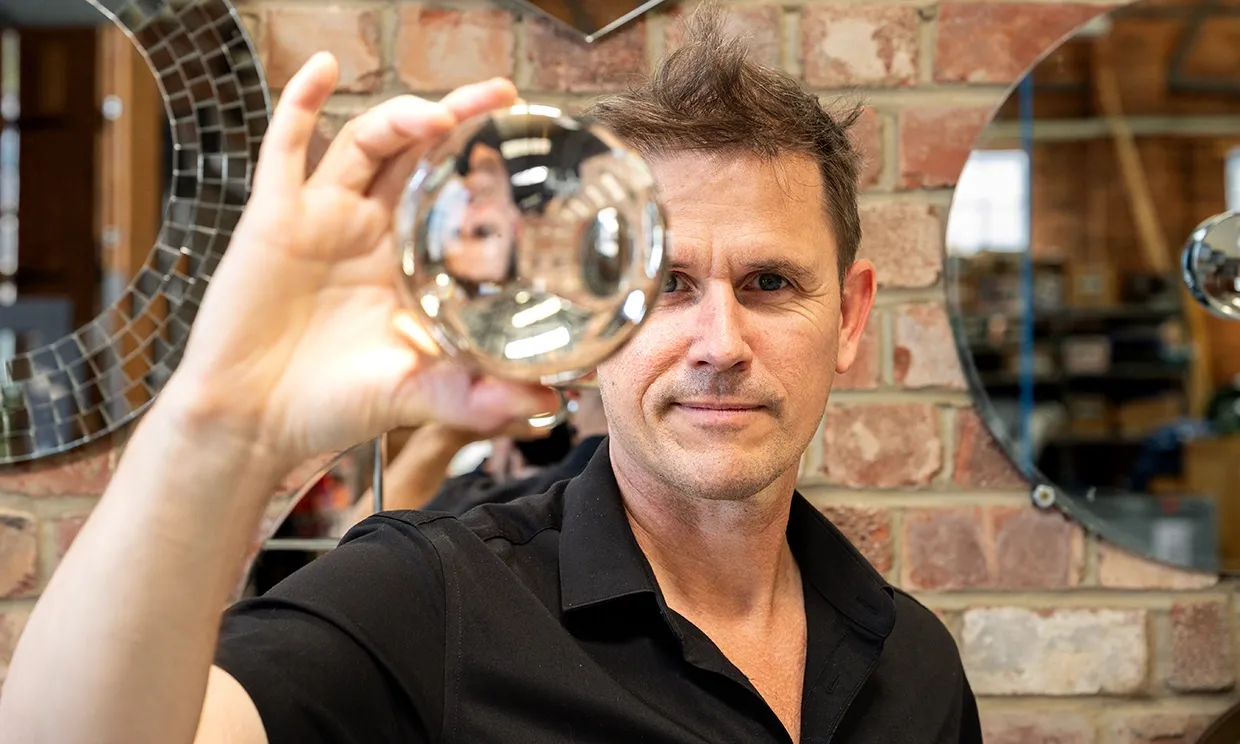
“I’m colourblind,” Luke tells me. “Red-green colour blind, and that’s given me a natural interest in visual perception and thinking about the processes of how we see. So I’m interested in revealing the invisible.”
Upside down
Visitors entering through the dome’s curtained doorway will step into a darkened central space. The hexagonal panels are around a metre wide and high, projecting light from outside onto the interior walls and producing a mosaic of the surrounding landscape. Clouds will drift across the walls, people outside will appear to walk upside down and the light will change as the day passes. There are even a couple of beanbags for anyone who fancies sitting down for a ponder.
You may know Luke for Play Me, I’m Yours, the project that saw more than 2,000 street pianos placed in public spaces around the world for people to play. That same interest in public engagement is at play with Pollenarium too. “It’ll be interesting to see how this artwork is interacted with,” Luke says, describing it as a “learning and experimental opportunity” for both himself and its visitors.
Jerram is an internationally recognised artist whose large-scale public artworks have been exhibited around the world, often playing with similar themes. “I’ve made sculptures of the Moon and the Earth. But on the other side I’ve made sculptures of viruses in glass and things like that. So there’s an interest in scale and how it makes you feel to stand next to something that is perhaps a million times larger than it should be, or a million times smaller.”
The installation carries a strong ecological focus, arriving amid steep drops in pollinator numbers across the UK. Recent research indicates that UK flying insect abundance has fallen by nearly 60 per cent over the past two decades, threatening ecosystems and the pollination of crops. Barking Riverside currently acts as an important urban refuge for pollinators, supporting 10 species of solitary and bumble bees.
Luke hopes the work can speak to different audiences in different ways. “I try to make artwork that has multiple doors of entry,” he says. “If you’re a biologist interested in the importance of insects or in insects’ vision, you’re going to appreciate it in one particular way. If you’re a gardener, you might appreciate it another. But also, if you’re a four year old child, you’ll just go in there and there’ll be a sense of awe and wonder, and it’ll be fun.”
Emerge East
Pollenarium was commissioned by Creative Barking and Dagenham alongside Barking Riverside Limited, with co-commissioning support from the Royal Horticultural Society and the University of Bristol. The artwork forms the centrepiece of the fifth annual Emerge East festival.
The festival programme also includes a daytime ‘Pollinators Parade’ featuring artwork by more than 1,000 local children, alongside creative workshops, live music and street food. Following the event, local artists will work with young people in the borough on follow-up environmental installations.
Ultimately, Luke hopes Pollenarium will offer visitors “a new perspective on the world” – and perhaps make us look a little differently at the insects that share it with us.
Pollenarium will be free to enter and shown for one day only at Barking Riverside’s Emerge East festival on Saturday 12 September 2026, 11am–9pm.


