

Staging horror films or sci-fi is theatre's Achilles heel. The latter is due normally to budget constraints; the former is more shrouded.
Yet the Almeida and director Nadia Latif, along with Carmen Nasir, have adapted Babak Anvari's chilling 2016 Persian-language supernatural horror film Under the Shadow.
In 1988 during the final days of the Iran-Iraq War, known as the War of the Cities, Shideh and her daughter Dorsa are left alone at the time of a bombardment - well, not quite alone.
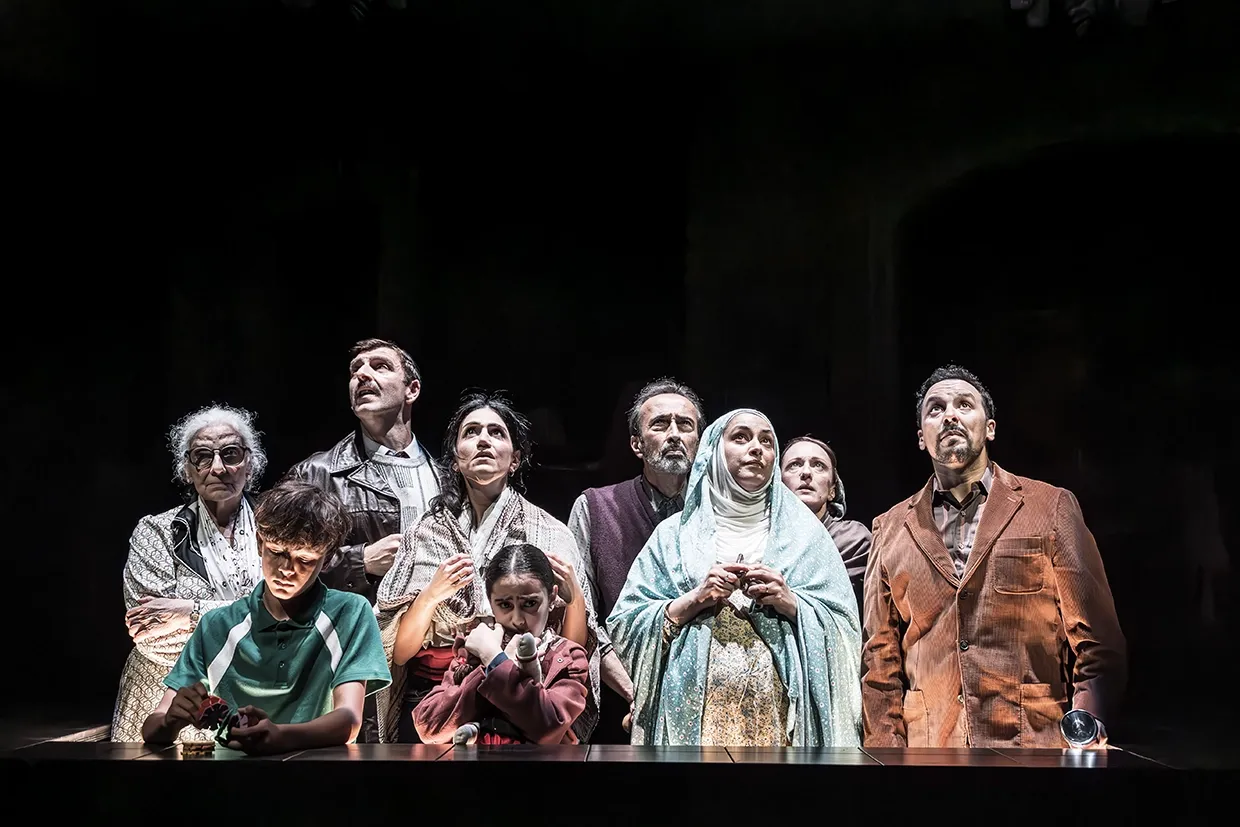
The depictions of the mid-war Iranian capital and its inhabitants are intriguing. Political change from Shah to Ayatollah in the late 1970s and the winding back of women's rights feel like a shard of poignant glass held up to our current political situation.
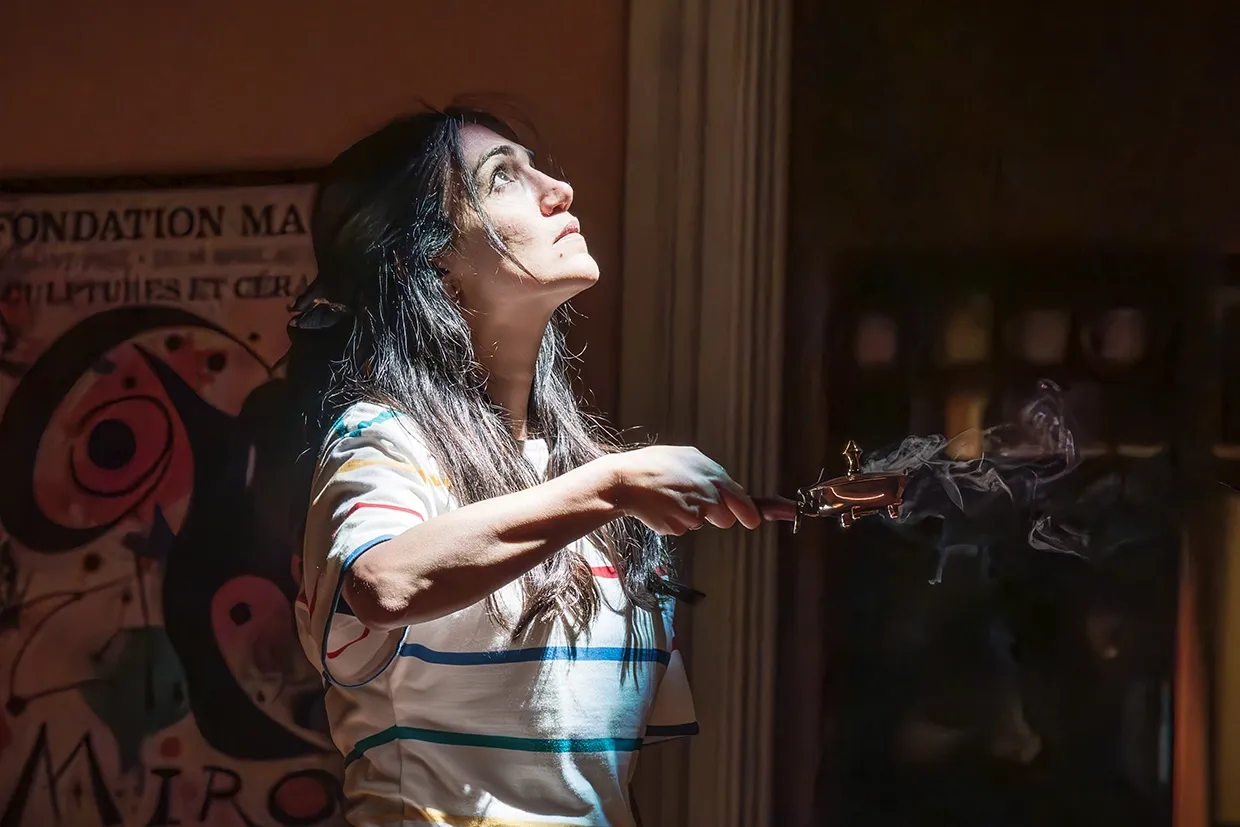
Lelia Farzad as our lead Shideh - struggling to study at medical school due to past political activism - embodies the contradiction between the optimistic revolution and its subsequent erosion. Ben Stones crafts an educated couple's apartment, skewing everything to produce a bisected life, all mustard walls and mosaics.
During the many airstrikes, the building's residents clamber through a trapdoor at the front of the stage, cowering in the basement and discussing politics and magic.
These moments of connection and disagreement are the most interesting: Nadia Albina as upstairs neighbour Pargol, driven to distraction by her father's ailing health; Mona Goodwin as the patriotic and kind Mrs Ebrahimi; Souad Faress as the no-nonsense, French-reading Mrs Fakur - these women are left caring for the aged, the young, and each other, as the world is reduced to dust around them.
But this is not just a story of the 500,000 to 1,000,000 casualties of the war, nor the chemical or political legacy it left - more's the pity.
No, there are syncretic Indo-European and Semitic mythical creatures, Djinn, gathering in the gloom. Following a very similar arc to many Western haunted house movies, the trapping impediment of the raging conflict and the layered narrative of female constriction did set the film apart.
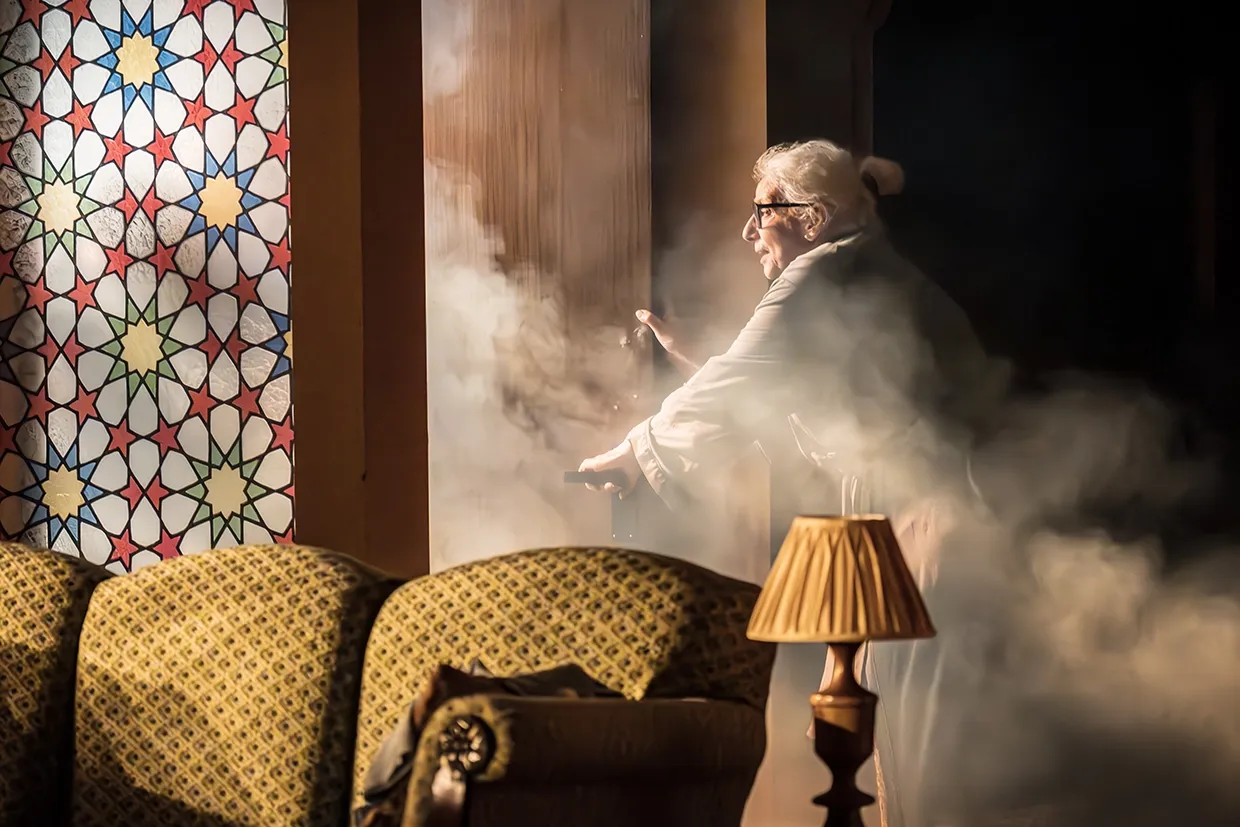
What struggles is transferring scary onto the stage. Jump scares are preceded by blackouts and shuffling footsteps getting into position; flickering TVs and books and doors fly open on command, but hysteria is never really conjured.
The lack of editing and angles - cinematic bread and butter - means that although some moments do shock, the rest flatten into haunted house groping and cheap parlour tricks, quite literally.
There are many missed opportunities. The entity, although wrapped in the dark robes of the chador, never escapes the corporeal. Surely some work with black billowing fabric would help convey the Djinn's changeable nature and hit the devouring-of-identity theme of the politicised garment?
Equally, they are described in the Quran as created from "smokeless fire", but this is never touched upon, and only light allusions to their transport on the wind are made.
Considering the title, there is little shadow work. Too much is asked of mother (Farzad) and daughter (Erin Jemmotte), and along with the pitiful practical effects, we are alarmed but never truly terrified.
Under the Shadow
Until 4 July
Almeida Theatre
Almeida Street, N11TA


